The success or failure of an investment property depends not only on the purchase price, but also on a comprehensive assessment of carrying costs, leverage, location, tenant mix, and exit liquidity. This middle installment of the checklist covers common but fatal mistakes — they all share the same flaw: focusing only on the buy, not the hold and exit.
Mistake 1: Underestimating Carrying Costs
Many new landlords only calculate mortgage payments and rent, forgetting ongoing costs like property taxes, insurance, maintenance, vacancy, and management. Factor those in and what looked like a positive cash flow property may actually be losing money. Property taxes vary significantly by location: Seattle is about 1% of home value, while Texas and many Midwest regions run 2–3%.
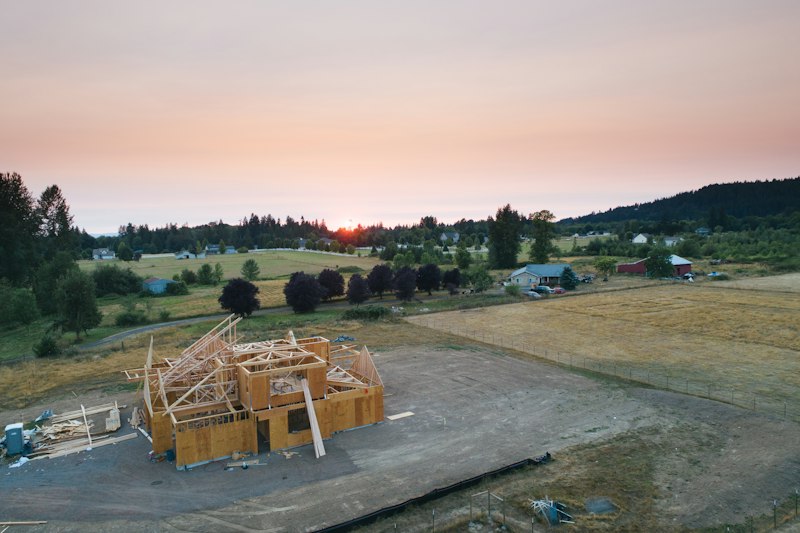
Also beware of buying a neglected home. American homes are mostly wood-frame construction, with each component individually repairable — foundation tilt can be fixed with helical piers, roofs, siding, and plumbing can be replaced separately. This is why 300-year-old homes still have residents. But the cumulative cost of replacing each component individually often exceeds building new. Buying a neglected home may require spending tens of thousands upfront on deferred maintenance — money that goes in without any return. Worse, home inspection reports aren't always reliable: Washington State's licensed inspectors grew from 9,000+ to ~170,000 in 6 years — roughly 19x growth — with widely varying quality, and reports that downplay issues are not uncommon.
Mistake 2: Mismatched Leverage and Cash Flow
Using excessive leverage makes cash flow fragile. Any vacancy or major repair instantly magnifies mortgage pressure, forcing the landlord to sell at the bottom. Leverage must match your personal cash flow capacity, with sufficient buffer for extreme scenarios.
Mistake 3: Ignoring Location
Location determines long-term demand. There's a real estate maxim: a bad house in a good community appreciates faster than a good house in a bad community. Put differently: a home priced far above the community median appreciates slowly; homes near the median appreciate faster. Cheap doesn't mean a bargain — cheap in the wrong location is the most expensive cheap.
Mistake 4: Tenant Mix and Renovation Mismatch
Not thinking through your target tenant profile means the home's layout, renovation level, and location may mismatch demand, making it hard to rent or limiting rent upside. Tenants are extremely price-sensitive: Bellevue's median home price is ~$1.8M with ~$5,000/month rent, while Lynnwood's median is ~$800K with ~$3,000/month rent. Home price elasticity far exceeds rent elasticity — tenants often willingly move further for modestly cheaper rent.
This also explains why you shouldn't buy homes that are too freshly renovated or too dilapidated. A brand-new renovation might command $300–$500 more per month, but recovering the renovation cost against that premium takes over a decade. An overly dilapidated home is hard to rent and needs renovation twice in 10 years. The most stable investment property is a mid-quality, middle-of-the-road renovation.
Mistake 5: Ignoring Exit Liquidity
When you buy, you need to think about how you'll sell. Low-liquidity properties have high exit costs and may be unsellable exactly when you need cash most — trapping paper gains in an illiquid asset.
Key Data
| Metric | Value/Situation | Notes |
|---|---|---|
| Seattle property tax | ~1% of value | Texas and others: 2–3% |
| WA licensed home inspectors | Grew from 9,000+ to ~170,000 in 6 years | ~19x growth, highly variable quality |
| Bellevue price/rent | Median ~$1.8M / ~$5,000/month | Core area |
| Lynnwood price/rent | Median ~$800K / ~$3,000/month | Peripheral area; price elasticity >> rent elasticity |
Summary
These mistakes all share the same flaw: focusing only on the buy, not the hold and exit. For Seattle Chinese-American investors: treat investment properties as a complete lifecycle to plan. Before buying, calculate all carrying costs including taxes, insurance, maintenance, and vacancy; match leverage to cash flow. Prioritize homes near the median with long-term location demand, avoiding over-renovated or dilapidated properties. And before placing an offer, think through your exit path and liquidity. Calculating buy, hold, and exit together is what truly lets you avoid these fatal pitfalls.