Two of the most certain long-term real estate opportunities in the U.S. for 2026 are: senior-related housing driven by aging demographics, offering stable counter-cyclical cash flow; and modular development, capturing the new-supply dividend through cost and timeline advantages. Both favor long-hold assets over quick flips. Ordinary investors can position early through compliant private equity or by holding suitable land.
Opportunity 1: Senior Housing Cash Flow
Aging demographics are among America's most certain long-term trends. Starting in 2026, the first cohort of Baby Boomers turns 80. Over the next decade, the 85+ population will roughly double to approximately 11.8 million — exactly the age group requiring around-the-clock care. Demand for senior-related housing and care is steadily rising, and these properties offer relatively stable, counter-cyclical cash flow that is largely insulated from short-term housing price swings.
Baby Boomers are the wealthiest generation in American history — roughly 20% of the population controlling over 40% of national wealth, and they prioritize elder care spending. In Seattle, the average AFH resident stays approximately 3 years, while their financial resources can sustain 10–12 years of care costs, providing a solid foundation for long-term stable rent. Certain demand plus strong paying capacity is the fundamental reason senior housing cash flow is so resilient.
Why Senior Housing Cash Flow Is So Reliable
AFH leases typically run 5 years with all maintenance borne by the tenant — structurally similar to commercial NNN leases — but purchased with standard residential financing at lower rates and greater valuation upside in rising markets. The stability stems from the underlying business profitability: as long as the business generates income, tenants have strong motivation to maintain long-term leases.
A sample AFH with 8 residents charging the minimum $7,000/month generates approximately $56,000/month in revenue. Subtract roughly $15,000 in caregiver costs and other expenses, and the operator nets approximately $35,000/month — even after paying $10,000/month in rent to the property owner. A single experienced operator typically runs approximately 5 AFHs simultaneously, generating roughly $1.5M in annual income. This profitability makes operators highly invested in long-term lease stability, giving property owners exceptionally reliable cash flow. Cap rates can reach 7% or even over 10%.
| Item | Monthly Amount | Notes |
|---|---|---|
| Revenue (8 residents) | ~$56,000 | Min $7,000/resident |
| Caregiver costs | ~$15,000 | Minimum 3 caregivers |
| Property rent | ~$10,000 | Paid to property owner |
| Operator net profit | ~$35,000 | After all expenses |
Why Senior Housing Is Scarce
The biggest barrier to AFH entry is not the license — it is the property itself. Compliant senior housing typically requires a large single-floor layout, at least 7 bedrooms, ADA accessibility, and fire sprinkler systems meeting municipal code. Such properties are extremely rare on the market — the overwhelming majority of ordinary homes do not qualify.
In 2025, King County transacted approximately 22,800 homes total. Of those, large single-floor homes with 7+ bedrooms numbered only about 4 — roughly 0.02% of all sales. Scarcity combined with high stable rents gives these assets the triple advantage of residential financing rates, commercial-grade lease stability, and strong appreciation potential. One documented case: an AFH property sold for $1.67M in 2024, reached a $2.5M valuation 8 months later — approximately 50% appreciation — while carrying a $10,000/month lease. Scarcity plus cash flow is precisely where the value lies.
Opportunity 2: The Efficiency Dividend of Modular Development
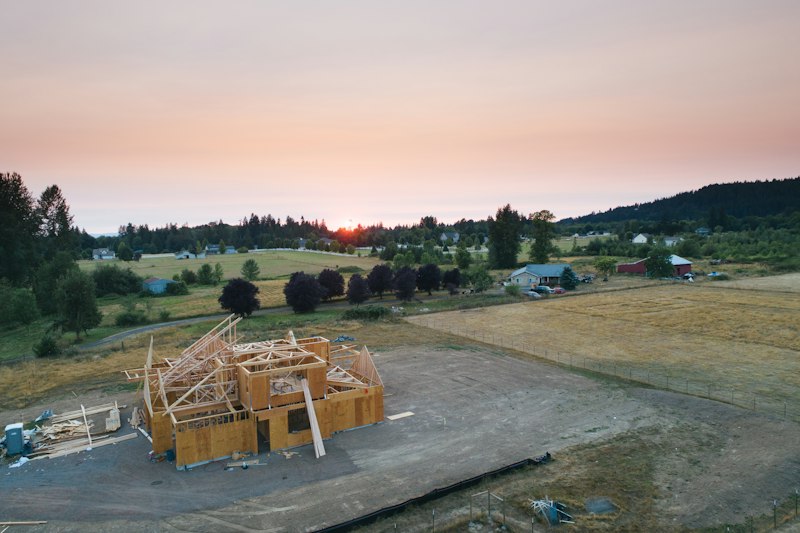
Modular construction cuts build cost approximately 30% versus conventional construction and compresses production timelines approximately 80%. As policy measures progressively clear financing obstacles, the supply dividend in this space is opening up. The core thesis: use industrial efficiency to fill the long-standing new housing supply gap.
Modular builds housing modules in a factory in parallel with on-site foundation work, then ships and assembles them on location. The process is permitted at the state level with state-employed inspectors stationed at the factory — eliminating the lengthy sequential municipal inspection process of traditional construction. In high-labor-cost, land-scarce markets like Seattle, modular's efficiency advantage is especially pronounced; in areas with already-low labor costs, the advantage is comparatively limited. The early-mover window currently available is expected to last approximately 2 years.
| Dimension | Conventional Construction | Modular |
|---|---|---|
| Build cost | Baseline | ~30% cheaper |
| Production timeline | Baseline | ~80% faster |
| Permit process | Sequential municipal inspections | State-level, factory-stationed |
| Best markets | Universal | High-cost markets |
How Ordinary Investors Can Position Early
Both opportunities favor long-hold assets over quick flips. For ordinary investors, senior-related housing is the most accessible entry point — approximately $1M in property can generate $7,000+/month in stable rent using standard residential financing, with moderate threshold and reliable cash flow.
Modular development requires larger capital and suits developers and institutions better — but retail investors are not excluded. Two paths exist: participate as an investor through compliant private equity in development projects, or hold land with development potential. If you hold land near major transportation corridors, in upzone-eligible zoning, and capable of supporting larger multifamily, its value is being re-evaluated.
| Opportunity | Retail Entry Method | Key Requirement |
|---|---|---|
| Senior housing | Direct purchase | Large single-floor, 7+ beds, ADA compliant |
| Modular development | Compliant private equity | SEC accredited investor |
| Modular development | Hold suitable land | Near transit, upzone-eligible |
Operational Requirements of Senior Housing
AFH cash flow is attractive, but it is fundamentally a property-plus-operations combination — operational requirements cannot be ignored.
| Requirement | Content | Implication for Investors |
|---|---|---|
| License | Adult Family Home permit | Operate in compliance or lease to licensed operator |
| Property hardware | Single-floor, ADA, fire systems | Rare supply, renovation costs |
| Caregiver staffing | Minimum 3 caregivers | ~$15,000/month labor cost |
| Regulatory compliance | State health and safety inspections | Ongoing compliance pressure |
For most ordinary investors, the most prudent approach is to purchase a qualifying property and lease it to a professional licensed AFH operator — acting as the 'landlord' earning stable rent without direct operational involvement. This captures NNN-like cash flow and residential financing rates while avoiding operational compliance and staffing risk.
The Shared Logic of Both Opportunities
Senior housing and modular development may seem unrelated on the surface, but they share the same underlying logic: both use 'certainty' to counter market uncertainty. Senior demand is locked in by demographic structure; modular efficiency is locked in by industrial economics. Neither depends on predicting short-term housing price direction.
| Opportunity | Source of Certainty | Uncertainty Hedge |
|---|---|---|
| Senior housing | Aging demographics | Counter-cyclical cash flow |
| Modular development | Industrial efficiency | Cost and timeline advantage |
In an environment of high rates and difficult forecasting, betting on certainty driven by long-term structural forces is far more reliable than chasing short-term spreads. This is why both opportunities suit patient, cash-flow-oriented long-term investors — not trend-chasing speculators.
Summary
Senior housing and modular development are the two most fundamentally sound long-term opportunities in real estate for 2026. The former offers reliable cash flow through scarce supply and stable leases; the latter captures the supply dividend through industrial efficiency. Both require long holds and prioritize cash flow.
For Seattle investors, the practical positioning strategy: target senior-related housing as a reliable cash-flow allocation, focusing on the rare properties meeting the hard requirements of single-floor layout, multiple bedrooms, and ADA compliance. For modular and large development, act within your means — participate via compliant private equity or activate suitable land holdings. The key to positioning early is understanding structural trends, not chasing short-term hot topics. The opportunities of 2026 belong to those willing to understand the underlying logic and hold with patience.