
I've talked before about real estate tokenization. Today I want to go deeper and cover three things: why what I started discussing last year about RWA is now actually happening; why BlackRock, stablecoins, and on-chain trading platforms are all accelerating at the same time; and why the first assets most likely to be repriced aren't all American real estate — but specifically those easiest to understand, verify, and buy globally.
Chapter 1: RWA Is No Longer Just a Concept
When I first discussed RWA (Real World Assets), most people's mental model was simple: take a real-world asset, make it a token, put it on-chain. That's not wrong, but it's too shallow. The real change is that America's financial back-end is starting to take this seriously.
In 2025, the US DTC (one of America's core securities clearing systems) received a conditional SEC no-action letter to pilot securities tokenization services. The GENIUS Act was signed into law in July 2025, with OCC already advancing implementation rules in 2026. This act's significance isn't making any one token rise — it's giving 'on-chain dollars' a clear US regulatory framework for the first time.
Assets need to go on-chain. Stablecoins are the liquidity layer. Without that layer, RWA is a display case; with it, it's a functioning market. Today's RWA is no longer a fringe topic — it's Wall Street's own back-end infrastructure actively moving in this direction.
Chapter 2: Why BlackRock, Stablecoins, and On-Chain Platforms Are All Accelerating Together
This isn't coincidence — it's one thing: America's best assets finding new distribution channels, while global capital finds new pathways into America.
Larry Fink's logic is clear: he sees a growing problem — most of America's best assets are inaccessible to ordinary investors. According to BlackRock's 2025 shareholder letter, 81% of US companies with over $100M in revenue are still private. The fastest-growing, highest-quality assets largely exclude ordinary participation.
Simultaneously, global infrastructure investment needs through 2040 are about $68 trillion. AI is generating enormous electricity demand — a single large data center can consume 1 gigawatt, roughly equivalent to Honolulu's peak daily electricity consumption on the hottest day of the year.
BlackRock's strategy: buy data companies, build private market capabilities — the core move is making previously opaque, non-standard, high-barrier assets increasingly transparent and standardized, enabling mass distribution.
Binance plays the 'last mile' role — connecting RWA into trading and collateral systems, making it liquid and tradeable rather than just a concept.
Chapter 3: What Does This RWA Momentum Mean for Real Estate?
For real estate, the bigger change isn't 'who gets to buy a little piece' — it's that real estate financing, liquidity, and buyer pools may all fundamentally transform.
Real estate, especially multi-unit apartments and some commercial properties, is inherently well-suited to standardization: it has cash flows, valuations, and divisible equity structures. The reason these assets have lived primarily in private funds and family offices isn't that they can only be held by institutions — it's that they were too hard to distribute, too non-standard, and ordinary people couldn't access them.
Once the way assets are expressed changes, the addressable buyer base isn't just local accredited investors — it becomes anyone globally who wants exposure to US dollar assets and US real estate cash flows. ITU estimates 6 billion people globally are online in 2025. The pool that can theoretically access your asset just grew exponentially.
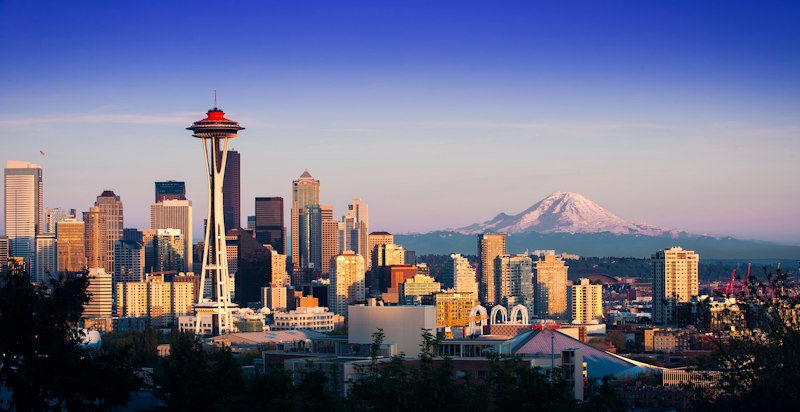
Real estate's biggest fear has never been 'no story' — it's 'no liquidity.' Especially in recent high-rate years, many projects didn't fail because the underlying asset was bad; they died because capital couldn't roll over. The same Seattle-area new multifamily building at $2M NOI is worth $40M at a 5% cap rate vs. $33.3M at a 6% cap rate. Nothing about the building changed — just more willing buyers, a different required yield — and the price difference is $7M.
If future buyers of US cash-flow real estate are more numerous, assets that were previously discounted for illiquidity can be repriced. The first beneficiaries likely aren't trophy assets everyone is already chasing — they're solid-quality assets with stable cash flows that previously suffered from distribution inefficiency: private fund multifamily portfolios, stable-operating but illiquid commercial properties.
Money coming in first chases what's easiest to understand and verify. A simple multifamily building in a housing-shortage area with obvious rent logic will attract capital faster than a complex office repositioning story. Standardized, easy-to-explain assets get repriced first. Bad assets put on-chain don't become good assets — they become bad assets on-chain. The real skill is judgment: does this asset have genuine demand, stable cash flow, a clear story, and real delivery capacity?