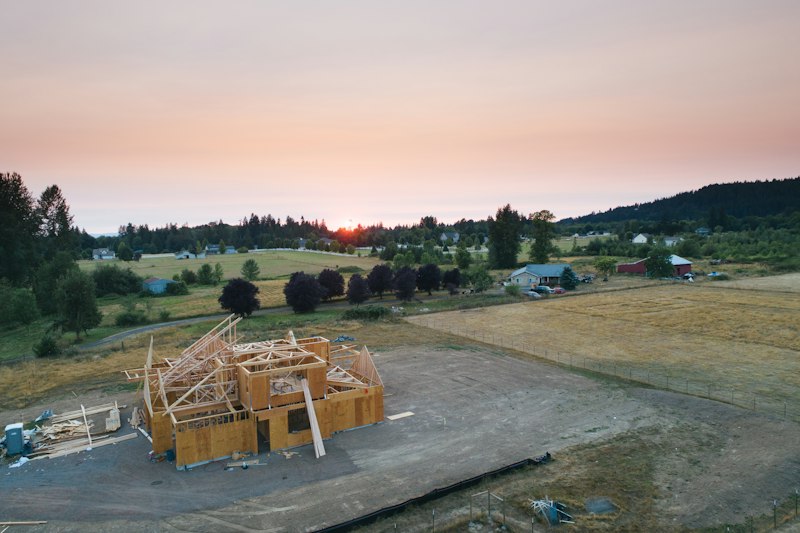
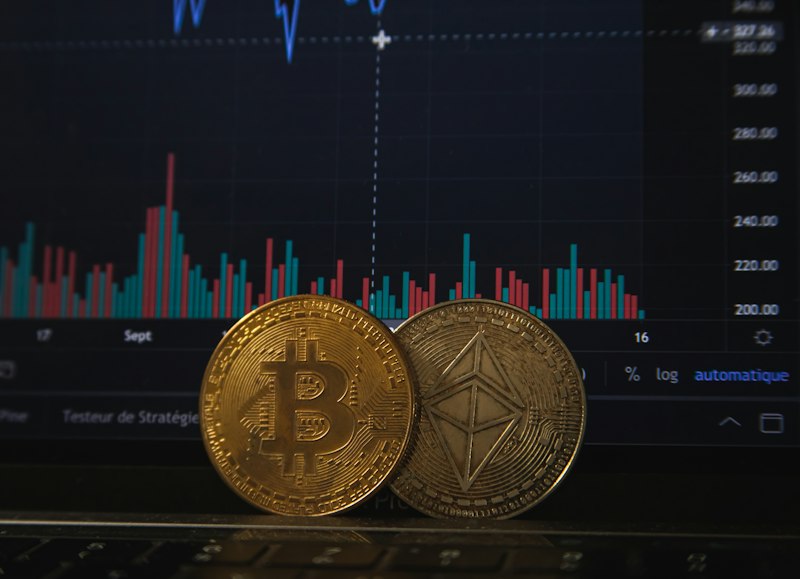
Institutional capital — represented by BlackRock — and crypto finance — represented by stablecoins and tokenization (RWA) — are financializing real estate from both ends. Property is shifting from a 'place to live' into a 'tradable financial asset,' rewriting its pricing logic, liquidity, and valuation methods. The core of this transformation: making real estate fractionatable, tradable, and globally priced — like stocks.
RWA Moving From Concept to Reality: 2025's Regulatory Breakthroughs
RWA — Real World Assets — refers to putting real-world assets of value onto a blockchain for trading: for example, putting a Seattle multifamily building on-chain and allowing global buyers to purchase fractional shares. In 2025, a series of regulatory breakthroughs moved this from concept to institutional reality.
In May, the Department of Labor rescinded its 2022 restrictions on 401(k) investing in crypto. In August, the White House issued an executive order directing research into allowing 401(k) plans to invest in private equity, real estate, and crypto. In July, the GENIUS Act passed, for the first time institutionally authorizing the dollar to go on-chain. In November, the SEC issued a No Action Letter to core clearing system DTC, allowing tokenized services to begin trial operations. At this point, currency, stocks, private equity, and real estate are all ready for on-chain treatment at the rules, clearing, and settlement layers. This cascade of regulatory breakthroughs is the hardest signal that RWA has entered a substantive phase.
| Date | Regulatory Breakthrough | Significance |
|---|---|---|
| May 2025 | 401(k) crypto restriction rescinded | Retirement funds can allocate |
| July 2025 | GENIUS Act | Dollar tokenization legalized |
| August 2025 | White House executive order | Study 401(k) into private equity/real estate |
| November 2025 | DTC No Action Letter | Clearing system trial begins |
Institutional Capital: Why BlackRock Is Accelerating
In his March 31, 2025 shareholder letter, BlackRock CEO Larry Fink noted that 81% of U.S. companies with revenue above $100 million are still private — meaning the fastest-growing, highest-quality assets are simply inaccessible to ordinary people. The solution: asset tokenization.
Behind this is also a massive capital gap: by 2040, global new infrastructure investment needs will total approximately $68 trillion, with a single large data center consuming 1 gigawatt of electricity. To price previously opaque private assets, BlackRock in June 2024 acquired Preqin — the world's largest private markets data platform — for $3.2 billion. The strategic intent is clear: first control the pricing data for private assets, then standardize and tokenize them for distribution to a broader global investor base.
Why Real Estate Is Leading the Charge
Among all private asset classes, real estate has the simplest valuation model — just four parameters: NOI, Cap Rate, MOIC, and DCF. Compared to equity, art, and other assets that are hard to price consistently, real estate's 'computability' makes it most suited to become a standardized on-chain asset.
Its capital scale is also the largest: global residential real estate is approximately $287 trillion, commercial real estate approximately $58.5 trillion, agricultural land approximately $48 trillion — totaling roughly $393.5 trillion, about 3x the global stock market ($125.7 trillion) and about 20x gold ($20 trillion). Add to this that real estate is closest to everyday life, most easily understood, and the most liquid of all private asset classes — real estate is therefore the fastest-moving element in the entire tokenization story.
| Asset Class | Global Scale | Comparison |
|---|---|---|
| Residential real estate | ~$287 trillion | Largest |
| Commercial real estate | ~$58.5 trillion | — |
| Agricultural land | ~$48 trillion | — |
| Real estate total | ~$393.5 trillion | ~3x global stocks |
| Global stock market | ~$125.7 trillion | — |
| Gold | ~$20 trillion | ~1/20 of real estate |
The Core of Repricing: Liquidity
Real estate's greatest fear has never been lack of narrative — it's lack of liquidity. Take a new multifamily building in suburban Seattle with net operating income of $2M: at a 5% cap rate, the valuation is $40M; at 6%, it's $33.3M.
The building, leases, and tenants are unchanged — only the buyer pool size and accepted cap rate differ, yet the price can swing by millions. This is precisely where RWA truly impacts real estate: when more buyers globally are willing to purchase cash-flow-positive properties, assets that were previously discounted for illiquidity can be repriced upward. The expansion of liquidity is fundamentally enlarging the buyer pool from 'a small number of local accredited investors' to 'global capital' — this is the root driver of valuation expansion.
How Ordinary Investors' Participation Will Change
Real estate financialization means ordinary investors may in the future hold fractional property shares and share in cash flow and appreciation without buying an entire building. This fundamentally changes both the threshold and method of real estate investing.
| Dimension | Traditional Property Investing | Post-Tokenization |
|---|---|---|
| Entry threshold | Full down payment (hundreds of thousands) | Small fractional shares |
| Liquidity | Months to exit | Near real-time |
| Asset scope | Primarily local | Global assets |
| Pricing transparency | Opaque | Visible on-chain |
But a lower threshold absolutely does not mean lower risk. When an asset can be held by many people in small amounts, more investors lacking judgment will enter — while the underlying asset quality is completely unchanged. Combined with Washington State's roughly 1.1 million-unit multifamily housing gap, those most easily understood, cash-flow-positive, and replicable multifamily properties are best positioned to benefit from this wave — but only if the underlying asset is fundamentally sound.
Summary
From BlackRock to stablecoins, real estate is being repriced. Financialization means ordinary investors may in the future hold property shares and share in cash flow and appreciation without buying entire buildings — a structural transformation reshaping real estate liquidity and valuation logic.
But remain clear-eyed: a bad asset on-chain doesn't become a good asset — it just becomes a 'bad asset on-chain.' The key is still whether real demand and cash flow are solid. Combined with Washington State's roughly 1.1 million-unit multifamily gap, the most understandable, cash-flow-positive, and replicable multifamily properties are best positioned to benefit. For investors, rather than chasing the conceptual heat of 'tokenization,' return to the fundamentals of real estate investing: real demand, stable cash flow, replicable asset quality. These remain the unchanging standards in the age of financialization.