
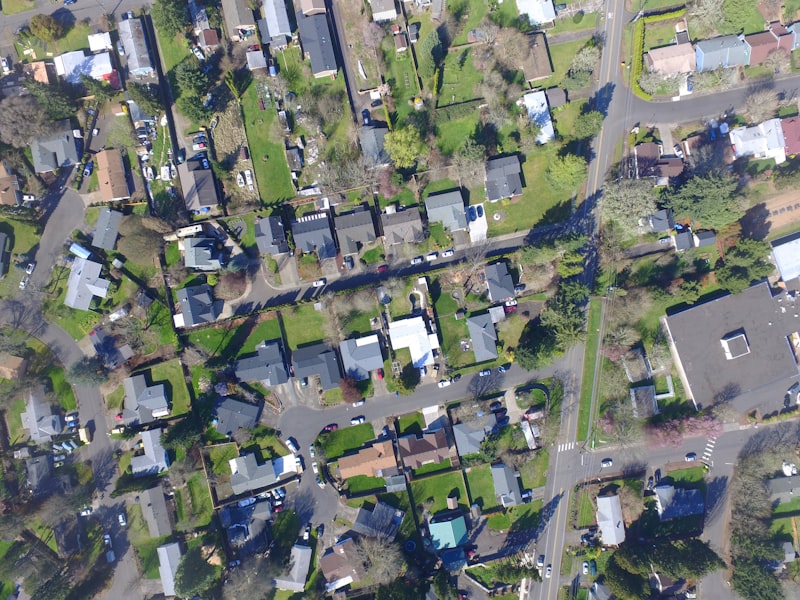
An HOA is not inherently a bad thing. It constrains some owner freedom through monthly dues and management rules, while maintaining the community's overall appearance and property values. Whether it's worth buying into depends on whether that HOA is financially healthy, whether its rules are reasonable, and whether its fees are transparent — you can't generalize.
What Is an HOA?
An HOA (Homeowners Association) is common in condo buildings and planned residential developments. It's established pursuant to community bylaws and is responsible for enforcing CC&Rs (Covenants, Conditions, and Restrictions). The mechanism is analogous to a company: the developer sets operational rules during development — similar to articles of incorporation — and the HOA as the executing body ensures every household complies.
These rules govern who maintains lawns, how mailboxes are managed, whether you can park in the driveway, whether trash bins can sit out overnight, whether trees in the backyard can be removed, whether front-yard fences can be built — community living details that rise above ordinary law as community self-governance requirements. If an owner refuses to comply, the HOA can issue fines with accruing interest and even place a lien on the property — the owner must clear it before selling.
The Upside: Protecting Community Value
HOA's first value: it usually has an Architecture Control Committee (ACC) that standardizes community architectural styles, preventing situations where one home gets painted a garish color or falls into disrepair and drags down the entire neighborhood's prices.
Second, many HOA communities include shared greenspace developed by the builder as a small park or playground, compensating for newer homes' smaller backyard sizes. Third, uniform lawn height, fence condition, exterior paint standards, and even roofing material requirements keep communities tidy long-term. Fourth, the HOA provides a community governance platform — even introverted owners have a forum for addressing issues collectively. All of these support property values for all owners.
The Downside: Limited Freedom and Blocked Development
The cost is primarily personal freedom. Exterior renovation, rentals, parking, pets, and even signs by the door can all be constrained by CC&Rs — owners must read the rules carefully, otherwise they may waste money, such as a self-installed front-yard fence being ordered removed.
More critically: single-family HOA homes have almost no lot-splitting potential. As Seattle, California, and Vancouver push upzoning (density increases), a non-HOA single-family lot has the opportunity to be divided and add housing. A Shoreline case example: purchased for $900K, a $400K backyard build could sell for $800K — gross profit of ~$400K in one year, nearly 100% return. HOA homes completely lose this appreciation potential. Additionally, once you have a falling-out with your HOA, you're at a disadvantage when facing fines — your position becomes passive.
What You Really Should Scrutinize: Finances
When buying an HOA home, the most important thing to scrutinize is financial health: whether reserves are adequate, whether large repairs are imminent, and what the historical dues increase rate has been. Currently many condo HOA monthly dues run $500–$1,000/month — a significant carrying cost in itself.
If reserves are insufficient and a major repair arises, the HOA levies a Special Assessment against each unit — often $10,000 or more. If you're selling at that moment, this unexpected burden severely disrupts the transaction and puts the seller in a very passive position.
Key Data
| Metric | Value/Situation | Notes |
|---|---|---|
| Condo HOA monthly dues | ~$500–$1,000/month | A significant carrying cost |
| Special assessment amount | Often $10,000+ per unit | Collected when reserves are insufficient |
| Non-HOA lot split case | Bought $900K + $400K build, sold ~$800K | Shoreline, ~$400K gross profit in one year |
| That case's return | ~100% | HOA homes have no such opportunity |
Summary
For Seattle Chinese-American buyers, an HOA's pros and cons depend on the specific community — you can't generalize. A financially healthy HOA with reasonable rules and transparent fees actually protects owners' assets. An HOA with depleted reserves and strict rules can become a persistent burden and block land appreciation potential.
Before signing, fully request and read through all HOA documents — focus on reserve levels, historical special assessment records, and dues increase history. Evaluate whether the property has lost its lot-split and addition potential due to the HOA. After buying, if possible, consider running for the HOA board to access first-hand financial information and anticipate risks early — turning the constraint into protection for your own assets.