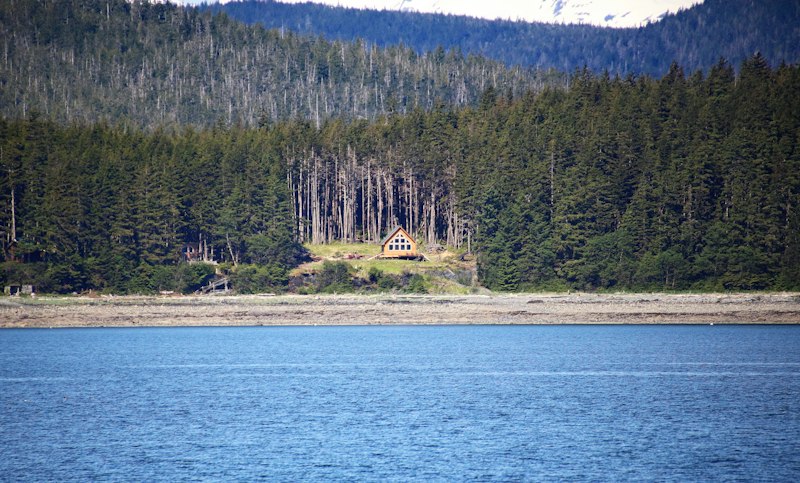
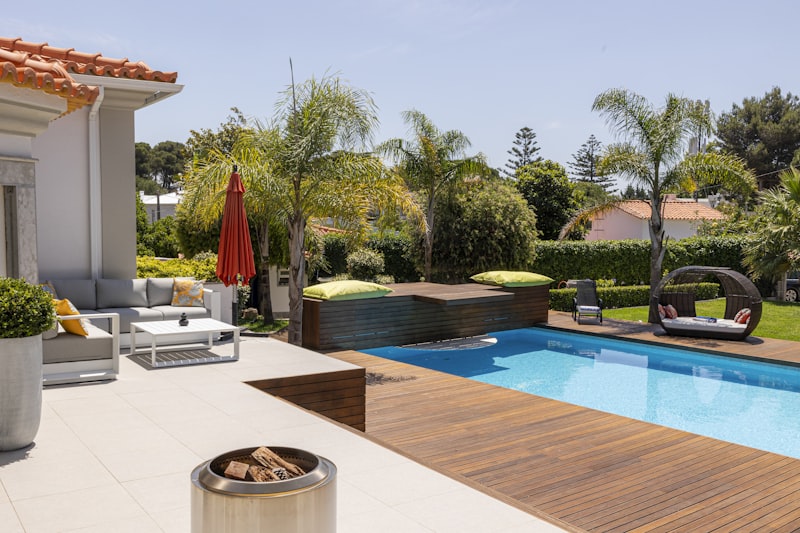
Mercer Island, with its irreplaceable island scarcity, a public school district rivaling top private schools, a concentration of low-density high-net-worth residents, and a central location benefiting from return-to-office trends, is viewed as Seattle's leading appreciation pick for 2025. The logic is simple: supply is geographically locked; demand is extremely rigid.
Scarcity: Island Geography Cannot Be Replicated
Mercer Island sits in the exact center of Greater Seattle — connected to Seattle to the west and Bellevue to the east by an 8-lane floating bridge (I-90). The island has only ~25,000 residents and ~6.4 square miles. By comparison, Bellevue has ~150,000 residents across 33.5 square miles.
The island's total land is fixed and cannot expand outward — this geographic scarcity cannot be replicated by any policy or capital. This is Mercer Island's deepest moat: no matter how markets shift, policies change, or capital flows in, the island's buildable land cannot grow by one inch. In a market where supply can be continuously expanded through densification and new construction, this kind of geographically locked scarcity is exceptionally rare and valuable.
Demand: Concentration of Old-Money Capital
Mercer Island's resident profile is distinctly different from Bellevue's. The island is 66% white, 22% Asian, with a median age of 46 and median household income of $210K. Bellevue is 45% white, 41% Asian, median age 38, income $150K. Mercer Island is smaller, wealthier, and lower density.
Its history traces to the 1950s: when the I-90 floating bridge opened and cars became common, wealthier Seattleites moved east — the wealthiest to Mercer Island, the middle class to Bellevue's Somerset. The wealthy prefer individually designed, custom-built homes, so the island has virtually no 'community development' concept; homes are all unique. The Pacific Northwest Contemporary style (dominant 1950–1970) has more than half its examples on this island — many have graced architecture magazine covers. This 'old-money capital' character gives island demand a unique and durable resilience.
| Metric | Mercer Island | Bellevue |
|---|---|---|
| Population | ~25,000 | ~150,000 |
| Area | 6.4 sq miles | 33.5 sq miles |
| Median household income | $210K | $150K |
| Median age | 46 | 38 |
Wealth Quality Validation
In the past 365 days, 26 homes on Mercer Island sold for over $5 million — comparable to the 31 sold in Medina (where Bill Gates and Jeff Bezos live). Microsoft co-founder Paul Allen's island estate sold in 2022 for $67.1 million, complete with a full basketball training facility.
More critically: residents' income resilience. The island is mostly capitalists who don't need to work, while Bellevue is mostly employees. Local kindergartens see drop-offs at 10am and pickups at 3pm (Bellevue is 8am and 6pm). As tech layoffs expand, Bellevue's employee-driven housing may be affected — but capitalists' lifestyles are unaffected by layoffs. This 'buyers aren't relying on salaries or visas' income structure makes Mercer Island far more resilient than other premium areas when AI layoffs hit high-tech earners.
Return-to-Office Location Advantage
The biggest driver of Eastside appreciation over the past five years was pandemic-era work-from-home. Now the wind has shifted: Amazon requires daily in-office attendance; Apple and Google require 3 days per week. Over 50% of Seattle-area jobs are in Seattle City proper. Those who bought large suburban homes during the pandemic now face one-hour commutes.
They're forced to sell the suburban homes and move closer to the city, but they've grown accustomed to large homes and can't accept Seattle's older stock — so Mercer Island and Shoreline become top choices. Mercer Island is perfectly centered between Seattle and Bellevue with easy I-90 access to both, perfectly matching the return-to-office era's desire for 'both short commute and large yard.'
School District and Undervalued Pricing
Mercer Island's public school district rivals Seattle's top private schools: most island children attend public school with well-raised old-money peers — effectively private-school quality at public-school cost.
On pricing, Mercer Island single-family home median is ~$2.4M — higher than Bellevue's ~$1.9M, Redmond and Kirkland's ~$1.6M. But statistics are misleading: Mercer Island's true comparable is Bellevue's downtown zip code 98004 (median ~$3.4M) — not all of Bellevue. From this perspective, Mercer Island is actually undervalued — a misread that creates opportunities for informed buyers.
| Area | Single-Family Median | Notes |
|---|---|---|
| Mercer Island | ~$2.4M | True comp is 98004 |
| Bellevue 98004 | ~$3.4M | True comparable |
| Bellevue overall | ~$1.9M | Misleading comp |
| Redmond/Kirkland | ~$1.6M | — |
Summary
For Seattle's Chinese-American buyers with sufficient budget and long-term preservation goals, Mercer Island is one of 2025's highest-certainty hard assets: supply is geographically locked, demand is supported by recession-resistant capitalists, return-to-office migration demand, and a top public school district.
Specifically: view Mercer Island through a long-term preservation lens rather than short-term cash flow. Use Bellevue 98004 (not all of Bellevue) as your price comparison to see the undervaluation. Track return-to-office policy implementation — it continuously directs high-net-worth relocation demand toward this island. For cash-flow investors and first-time buyers on limited budgets, Mercer Island is not appropriate — understanding its asset character and target buyer profile is the prerequisite for making the right call.