Modular construction uses factory production to cut build costs by ~30% and construction timelines by ~80%, dramatically improving capital turnover efficiency and enabling very high annualized total returns on the right projects. But this model demands exceptional financing capability and project execution — it currently remains a niche investment frontier with few players and deep moats.
Why Annualized Returns Can Multiply
The core reason modular construction can achieve extremely high annualized total returns is time. Annualized return is roughly equal to project profit margin divided by capital deployment time. Modular dramatically compresses project timelines — sharply shrinking the denominator — naturally amplifying annualized returns. This is fundamentally different from traditional buy-and-hold, passively waiting for appreciation.
Dual Advantages of Cost and Timeline
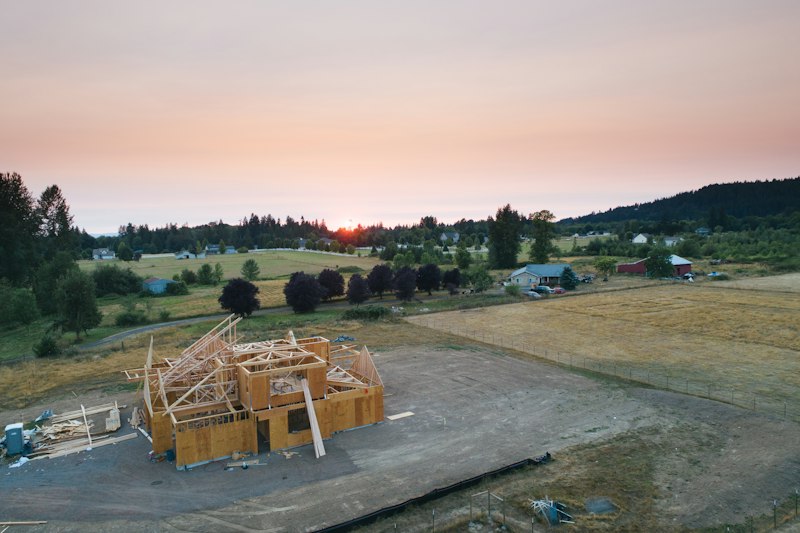
Modular construction uses factory production to build most of a home's structure in a central factory, then ships and assembles on site. Since factories employ stable, experienced workers, quality is more controlled. In high-labor-cost markets like Seattle, on-site construction costs roughly $300–400 per square foot, with labor as the dominant component. By comparison, modular cuts costs ~30% and timeline ~80% — a three-year project may deliver in 18 months.
A Real Case Study: Friday Harbor
Consider a 38-townhouse project on Friday Harbor — a wealthy island near the U.S.-Canada border. The island has severe labor shortages; on-site construction labor costs run ~$380/sq ft, far above Seattle's ~$180/sq ft. Traditional construction would cost ~$600K per unit, requiring sale prices of ~$700K to break even — far beyond what local blue-collar buyers can afford. With modular construction, unit costs dropped to ~$350K; pricing at ~$500K works easily because at zero-down financing the monthly payment matches comparable apartment rents locally.
Capital Turnover Multiplier Effect
The project received city approval to sell in batches — build 8 units, sell 8, recycle capital, then build more. This rolling capital reuse dramatically lowers required startup capital. Plus, with modular speed, the three-year project was completed in 18 months — producing an annualized profit potential of ~300%. Shorter timelines mean the same capital turns more times per year — that is the fundamental source of high annualized returns.
Policy Advantage: Washington State's Approval Edge
In Washington State, modular construction has an institutional advantage: it doesn't need city building permits — only Washington State Department of Labor and Industries (L&I) permits. State permits are issued quickly, typically within ~2 months, while city permits often require inspection throughout construction, dragging the whole process out 2–3 years. This dramatic approval shortening further amplifies modular's turnover advantage.
Summary
Modular construction is a seriously underrated investment frontier where policy is loosening. It's not for everyone, but for investors with the capability to manage financing, government relations, and project execution, it opens a return profile completely different from traditional property investing. For those interested in entering this space, start by finding state-certified factories, standardizable multi-unit lots, and cooperative local governments — build solid financing and due diligence before scaling.