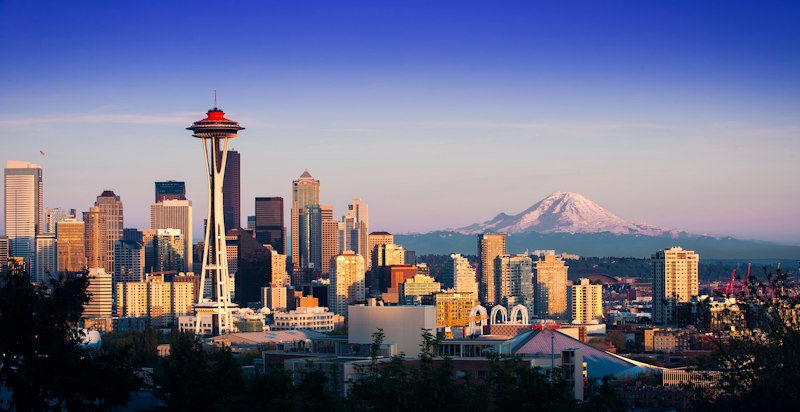

Even if Musk's vision of universal high income is realized, U.S. home prices won't rise uniformly — they'll diverge further along the axis of scarcity. The reason: the supply of prime locations and scarce resources is fixed. When more money chases a limited pool of good assets, the result is that top scarce assets get bid up dramatically, while abundant, replicable ordinary housing performs modestly.
The Vision of Universal High Income
Musk has repeatedly described a future where artificial intelligence creates enormous material abundance, and everyone enjoys some form of universal high income or universal basic income. This vision sounds appealing and raises a key question: when overall purchasing power is universally elevated, how will home prices respond?
Many people instinctively assume that when everyone has more money, prices simply rise across the board. That intuition is wrong. It ignores the fundamental logic of real estate pricing — scarcity. A rise in overall purchasing power doesn't change the fixed supply of quality housing; it intensifies competition for scarce assets. Understanding this is the key to reading the next decade's asset divergence.
Scarcity Doesn't Disappear When Everyone Gets Richer
Homes — especially good homes — are inherently scarce goods, and that scarcity doesn't vanish as society grows wealthier. Top school districts, waterfront locations, urban cores: these scarce resources are fixed in supply, and can become even scarcer as developable land runs out.
Take Seattle: Bellevue's core school district, Kirkland and Medina's waterfront parcels, and Seattle's mature urban neighborhoods have essentially no room to expand. Medina (98039) — home to Bill Gates and Jeff Bezos — has fewer than 3,000 residents and a fixed number of lakefront lots. Its median sale price climbed from roughly $2 million to over $3 million over the past decade, precisely because scarcity drives pricing. No matter how wealthy society becomes, there will be no more lakefront parcels in Medina.
| Asset Type | Supply Elasticity | Response to New Capital | Seattle Examples |
|---|---|---|---|
| Unique scarce assets | Near zero | Prices continuously bid up | Medina lakefront, Bellevue core schools |
| Quality established-area homes | Very low | Steady appreciation | Seattle Queen Anne, Kirkland |
| Replicable ordinary housing | High | Gains diluted by new supply | Suburban new-construction tracts |
Why Broad Price Gains Are an Illusion
To understand this, split the housing market into two layers. The bottom layer is abundant, continuously developable ordinary housing — cookie-cutter homes in outer suburbs. The top layer consists of irreplaceable assets defined by geography and resource endowment.
When purchasing power rises broadly, bottom-layer price gains get absorbed by new supply — developers can simply build more similar homes. Top-layer assets can't be expanded through development, so stronger demand pushes prices continually higher. The reason broad gains are illusory is that these two layers respond completely differently to new money. In short, rising wealth first inflates the price of location and scarcity — not concrete and lumber.
Divergence, Not Uniform Appreciation
So the most likely outcome of universal high income is further price divergence. On one end: top scarce assets — prime locations, top school districts, rare views — which are the true hard currency and will be continuously bid up. On the other end: abundant, replicable ordinary assets, which will perform relatively modestly.
This can be summarized simply: the more money in society, the more extreme the premium on good assets, while ordinary assets are diluted by continuous incremental supply. Historically, U.S. money supply M2 expanded roughly 80% over the past decade, while top-location luxury homes appreciated far more than ordinary housing — a real-world confirmation of this divergence mechanism.
| Dimension | Top Scarce Assets | Replicable Ordinary Assets |
|---|---|---|
| Price trend | Premium continuously widening | Relatively modest |
| Inflation protection | Strong | Weak |
| Liquidity | Limited but solid buyer pool | Intense same-tier competition |
| Allocation advice | Concentrate here | Caution — avoid spreading thin |
What This Means for Buyers
If you accept this future scenario, the asset allocation strategy is clear: invest in scarce, irreplaceable quality assets — not abundant, easily-diluted ordinary homes. In Seattle, this means prioritizing mature communities in prime locations, top school districts, and rare-view properties — not the cookie-cutter new construction in outer suburbs.
A key clarification: "scarce" doesn't equal "expensive." True scarcity is about attributes that cannot be expanded — lakefront footage, properties within top school district boundaries, walkable access to established commercial cores. These are the assets that outlast cycles, not simply high total prices. A large house on the suburban fringe may be far more vulnerable than a smaller home in a core location, because the former's supply can be replicated and the latter's cannot.
Three Tiers of Scarce Assets in Seattle
To put "invest in scarce assets" into practice, consider Seattle's three-tier framework. The higher the tier, the more rigid the supply and the stronger the cycle resilience. Buyers should aim as high as their budget allows — don't use the same money to buy a larger but replicable property at a lower tier.
| Tier | Representative Areas | Source of Scarcity |
|---|---|---|
| Top | Medina, Clyde Hill, Mercer Island lakefront | Fixed lakefront parcels |
| Core | Bellevue school districts, Kirkland, Queen Anne | Top schools + mature commercial |
| Ordinary | Suburban new-construction tracts | Supply continuously replicable |
The test is simple: if a developer could build an identical batch of homes nearby, it's not a truly scarce asset. If the location and resources are irreplaceable, it's the hard currency that outlasts cycles.
Summary and Recommendations
Scarcity is always the core of property pricing. Even in a world of universal high income, home prices won't rise uniformly — they'll diverge further along the axis of scarcity. Seeing through this is far more important than fantasizing about broad gains.
For Seattle buyers and investors, the practical strategy is to concentrate limited budgets on irreplaceable scarce assets — prime locations, top school districts, rare views — rather than being led astray by the illusion of broad appreciation and spreading capital into easily-diluted ordinary homes. In a future where purchasing power may be continuously elevated by AI abundance, whoever holds the scarce assets holds the pricing power.