
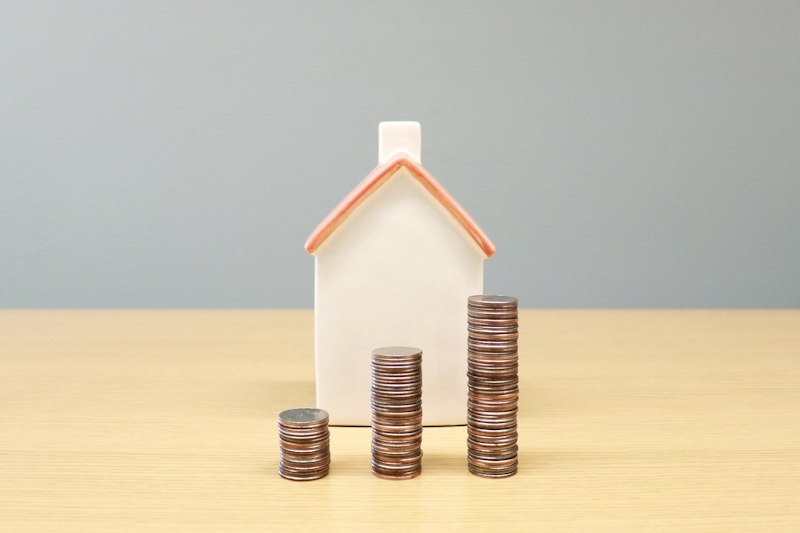
The market's real worry about the nomination of a new Fed chair is not rate cuts themselves, but the potential erosion of the Fed's independence. If a new chair "mindlessly cuts rates" to cater to political demands, the 10-year Treasury yield would instead spike, pushing up mortgage rates and suppressing home prices. This is exactly the opposite of the intuition that "rate cuts are good for housing." Understanding this counterintuitive mechanism is the key to judging current housing-market risk.
The Divergence Between Short and Long Ends
To understand the market's panic, you must first distinguish two kinds of rates. What the Fed directly controls is the overnight lending rate—the short end; what a 30-year mortgage actually tracks is the 10-year Treasury yield—the long end. The two do not move in the same direction, and often diverge.
History has repeatedly shown the Fed cutting rates while mortgage rates rose—2024 is the most recent example: the Fed cut a cumulative 100 basis points, yet 30-year mortgage rates rose from just over 6% to above 7%. The reason is that the short-end rate reflects the central bank's policy intent, while the long-end rate reflects the market's expectations of future inflation and fiscal conditions. When the market does not believe inflation can be controlled, the long-end rate rises on its own, running counter to short-end policy.
The Backlash of Mindless Cuts: A Crisis of Trust
The White House's nominee, Kevin Hassett, is a recognized dove, so once the nomination emerged, Wall Street's first reaction was not celebration but panic. The underlying logic is simple: if the Fed loses its independence and becomes the White House's "ATM," the market will expect inflation to spiral out of control. Investors then demand a higher return as compensation—that is, a higher term premium.
The result is that expectations of short-end cuts instead push the long-end rate up. In the very days as the nomination became clearer, the 10-year Treasury yield climbed from about 4.35% to about 4.62%, rising nearly 30 basis points. This is a textbook case: the market votes with its feet, pricing the expectation of "politicized rate cuts" directly into the long-end yield—and the long end is precisely the pricing anchor of mortgages.
A Double Blow to Mortgage Rates
The mortgage rate consists of two parts: one is the "base price," the 10-year Treasury yield; the other is the "markup," the spread banks charge extra to cover risk. In calm times, this spread is about 1.5%. But the uncertainty brought by a new chair has banks raising their risk pricing, and the spread may be pushed up to about 3%.
With base price and markup rising simultaneously, the mortgage rate could be pushed to 7.6% or even 8%. And as the mortgage rate rises from 6% to 8%, with other conditions unchanged, buyers' purchasing power falls by about 20%, and home prices naturally come under pressure. This is the double blow that "mindless rate cuts" could trigger—it not only fails to lower mortgages but, through an independence crisis, pushes up both the base price and the markup at once.
| Component | Calm Times | Under a Crisis of Trust |
|---|---|---|
| 10-yr Treasury (base price) | ~4.35% | ~4.62%+ |
| Bank spread (markup) | ~1.5% | ~3% |
| Final mortgage rate | ~6% | 7.6%-8% |
| Purchasing-power impact | Baseline | Down ~20% |
Why It Most Likely Won't Spiral Completely Out of Control
For the White House, the stock market and GDP are the lifeline of its governing credibility; allowing the long-end rate to spiral out of control and trigger a synchronized housing and stock crash does not serve its interests. So while the market panics, the probability of completely losing control is not high—more likely is a phase of violent volatility.
A signal worth noting: Hassett recently and unusually publicly advised the sitting chair not to cut rates in December, on the grounds that the federal government shutdown over the debt ceiling for a month in October distorted economic data and overstated the fourth quarter's weakness. This hawkish stance is, in essence, a pledge of loyalty to the bond market and to Fed independence, an attempt to stabilize long-end confidence. It shows that even a dove understands how important it is to maintain the market's trust in independence.
Term Premium: The Core of Risk Pricing
The key to understanding this panic lies in the concept of the term premium. It is the extra compensation investors demand for holding Treasuries long-term and bearing future uncertainty. When the market doubts the Fed's independence and fears inflation spiraling out of control, the term premium rises significantly, and the long-end yield rises with it.
This is precisely why expectations of short-end cuts instead push the 10-year Treasury yield up via the term premium. For mortgages, every jump in the long end is further amplified by banks' risk spread and ultimately lands on the homebuyer's monthly payment. The term premium is, so to speak, the invisible transmission chain connecting "politicized monetary policy" to "the ordinary person's monthly payment."
| Concept | Meaning | Effect on Mortgages |
|---|---|---|
| Short-end rate | Fed overnight lending | Indirect, can diverge |
| Long-end rate | 10-year Treasury | Directly sets the base price |
| Term premium | Risk compensation for long holding | Rises if independence eroded |
| Bank spread | Risk markup | Amplified under uncertainty |
Indicators for Buyers and Sellers to Watch
For ordinary buyers and sellers, rather than tracking every Fed news item, it is better to watch a few indicators with genuine predictive value. The table below offers a practical watch list.
| Indicator | Key Threshold | Meaning |
|---|---|---|
| 10-yr Treasury yield | Back below 4.2% | Long-end peak-and-pullback signal |
| Mortgage rate | Breaks below 6.5% | Real improvement in purchasing power |
| Term premium trend | Stabilizing/falling | Trust in independence recovering |
Before the 10-year Treasury yield clearly peaks and pulls back to around 4.2%, any bottom-fishing move calls for extra caution. To judge the market, watch the long end, rather than being led by short-end news.
The Counterintuitive Relationship Between Rate-Cut Expectations and Mortgages
Many believe "the more dovish the Fed, the lower the mortgage," but when independence is in question, this relationship reverses. The table below uses three scenarios to illustrate this counterintuition.
| Scenario | Fed Stance | Long-End Treasury | Mortgage Rate |
|---|---|---|---|
| Healthy cut | Independent, credible | Down | Down |
| Politicized cut | Independence questioned | Up | Up |
| Hawkish stance | Defending credibility | Stable | Stable |
Understanding this table is understanding why the market panics rather than cheers at a "dovish chair." When a rate cut is read by the market as "yielding to political pressure," inflation expectations and the term premium rise together, pushing the long-end rate up and making mortgages more expensive instead. This is precisely the deeper reason why the 100-basis-point cuts in 2024 were accompanied by mortgages rising above 7%.
Buyer Strategies
Faced with this uncertainty, what buyers should do most is not to predict the Fed, but to build their own discipline of observation and response. The table below offers three actionable strategies.
| Strategy | Specific Approach | Purpose |
|---|---|---|
| Rate-lock timing | Lock after the long end peaks and pulls back | Avoid chasing the top |
| Budget cushion | Stress-test at a 7.5% rate | Withstand upside risk |
| Phased entry | Don't go all-in during panic | Reduce timing risk |
The core principle: build your home-buying decision on the conservative assumption that "rates may stay high or even rise," rather than betting on a politically driven, highly uncertain rate cut. As long as your own cash flow can withstand a 7.5% rate, you need not let your emotions be moved by every Fed news item.
The Discipline in One Sentence
To judge this round of risk, remember one sentence: what determines your monthly payment is not whether the Fed cuts rates, but the direction of the 10-year Treasury yield; and a Fed whose independence is in doubt may instead push the long-end rate even higher.
| Real Signal | False Signal |
|---|---|
| 10-yr Treasury peaks and pulls back | Fed announces a rate cut |
| Term premium stabilizes | A dovish chair is nominated |
Before the long end clearly pulls back to around 4.2%, any bottom-fishing move should remain cautious.
Summary and Recommendations
For Seattle buyers and sellers, rather than watching whether the Fed meets or cuts, it is better to fix your eyes on the 10-year Treasury yield—the indicator that truly determines the cost of your monthly payment. Sellers planning to list next spring and buyers hesitating over whether to lock a rate should both anchor on the long-end trend.
What the market fears is not rate cuts, but eroded independence. A Fed that has lost its independence may instead push mortgages toward 8% by driving up the long-end rate. Before the 10-year Treasury yield clearly peaks and pulls back, caution is the more prudent posture. Once you grasp the counterintuitive logic that "rate cuts may actually suppress home prices," you won't be misled by the surface positive of a rate cut.