
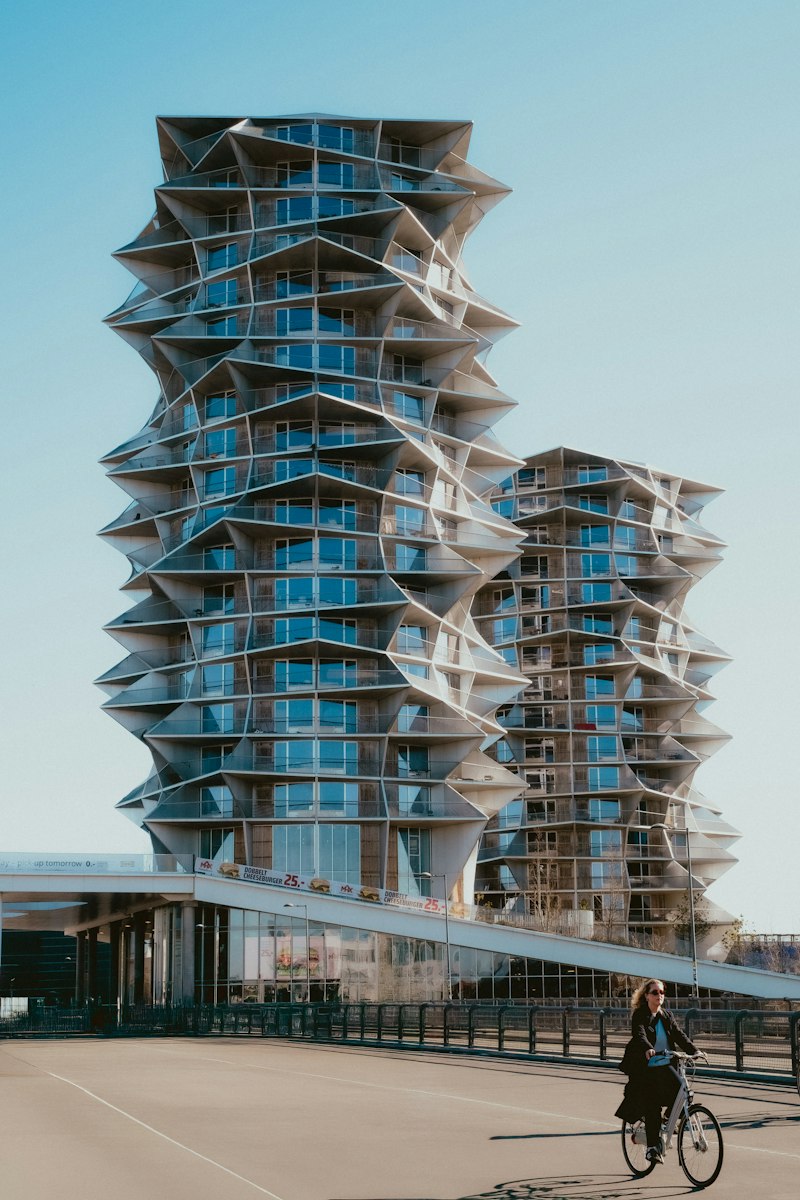
As Washington State and Seattle push forward densification legislation, pure single-family (Single Family) zoning is gradually exiting; single-family lots are increasingly allowed to add ADUs, DADUs, and even be split for multi-unit construction. This does not mean detached homes will disappear, but that the highest-and-best-use of land is being repriced. Reading this trend is the key to understanding Seattle's land value over the next decade.
Washington's Unique Land-Planning Framework
Washington's land-planning philosophy is devolution rather than centralized control. At its core is the state's Growth Management Act (GMA), effective in 1990, which requires the state to set the direction and deadlines while delegating planning and execution power to the counties. The accompanying Shoreline Management Act (SMA) is merged with it into a unified standard.
The key yardstick for execution is the Urban Growth Area (UGA), which no city has the authority to alter on its own, thereby avoiding mutual competition and fragmentation. Within this framework, each city prepares its most important land-planning document—the Comprehensive Plan—which undergoes a major revision every 10 years and a minor revision every year. For the three greater Seattle counties (King, Snohomish, Pierce), 2024 is precisely the year of the decennial major revision, to be completed by December 31; counties like Skagit, Island, and Jefferson must complete theirs by June 30, 2025.
Two Major Reform Bills
State legislators, displeased that cities' comprehensive plans were too conservative and drove home prices high, enacted two far-reaching residential land laws at the state level in 2023. The first is HB 1110 (Missing Middle), requiring single-family-zoned lots within the UGA to allow multi-unit housing, with up to 6 units depending on city population and distance from transit hubs. The second is HB 1337 (ADU), requiring cities to allow at least 2 ADUs on single-family lots, whether attached or detached, without additional owner-occupancy or off-street parking restrictions—and, more importantly, each ADU can be sold separately.
Seattle and Kirkland led with legislation as early as 2020, building about 4,000 ADUs over the past three years; the condo-title detached homes common in Kirkland originate from this. Note that existing CC&Rs may prevent a lot from building an ADU or selling it separately, but some developers have already won judicial support through litigation to remove such restrictions.
More Bills in the Pipeline
The wave of densification is far from over. State laws still advancing include: SB 5058 and 5258 (Condo Reform), giving the green light to small condo developments; HB 1998 to 2004 (Co-living Law) and HB 2071 (Building Code), simplifying multi-unit development; SB 6015 (Parking Requirements), prohibiting the use of a lack of parking to block high-density construction near transit hubs; and the aggressive HB 1245 (Lot Splitting) and HB 2160 (Transit-Oriented Development), the latter allowing a floor area ratio (FAR) of up to 3.5 near transit hubs. The legislative main line is clear: high density, small homes, low prices.
Key Data
| Indicator | Value/Situation | Note |
|---|---|---|
| GMA effective year | 1990 | Cornerstone of WA land planning |
| Three-county comp-plan deadline | December 31, 2024 | King, Snohomish, Pierce |
| HB 1110 allowed units | Up to 6 units | Single-family-zoned lots |
| HB 1337 required ADUs | At least 2, separately sellable | No owner-occupancy or parking restrictions |
| Seattle/Kirkland ADUs built | ~4,000 (3 years) | Led with legislation in 2020 |
Detached Homes Won't Disappear, but Will Be Repriced
"No single-family homes in 10 years" is an exaggeration. Detached homes will not disappear, but pure single-family zoning will gradually exit. What truly changes is the highest-and-best-use of land: a lot that could once hold only one house may in the future be allowed to hold three or four units, and the land value is repriced accordingly.
For pure owner-occupiers, the impact is limited—they still live in their own home; but for investors and developers, this is a structural opportunity—detached homes with large lots, near transit corridors, and with upzoning potential will see their value rediscovered by the market.
Summary and Recommendations
Judging the value of a piece of land increasingly depends on its development potential, not merely the detached home as it stands. For Chinese buyers and investors in Seattle, the recommendation is to look beyond the house itself when evaluating a property and to study its zoning, lot size, proximity to transit hubs, and the room to add or split under new laws like Missing Middle, ADU, and lot splitting. Over the next decade, those who know how to assess land use and development feasibility will gain the upper hand in the Seattle housing market.