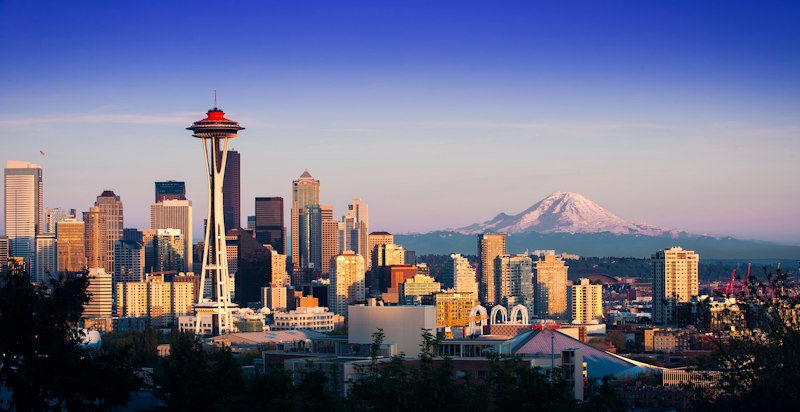

Seattle and the Bay Area — two tech powerhouses — are experiencing market realities that point in opposite directions. Seattle's rising inventory and softening prices represent a healthy, orderly bubble deflation. The Bay Area's apparent tightness and prosperity is, at its core, a false boom propped up by venture capital money. NWMLS Q1 2026 data shows all of King County at just 2.66 months of supply — still a seller's market. The real pressure is concentrated in one submarket: Bellevue.
Seattle Is Not One Market
Outside observers are often misled by the headline of Bellevue listings up 52.5% year-over-year, concluding Seattle is collapsing. Drilling into the data: all of King County is at 2.66 months supply, greater Seattle 2.7, single-family homes even lower at 2.1 months. The city median is approximately $840K, essentially flat year-over-year — firmly in seller's market territory.
The 5.1-month figure comes from the Eastside, primarily Bellevue: listings up 52.5% YoY, median around $1.38M, prices down only 1.56%. Elevated inventory is concentrated in one location. Bellevue is not Seattle.
| Area | Months of Supply | Median Price | Price Change |
|---|---|---|---|
| King County overall | 2.66 months | — | Seller's market |
| Seattle city, single-family | 2.1 months | ~$840K | Roughly flat |
| Bellevue East | 5.1 months | ~$1.38M | -1.56% |
This Is a Bubble Deflation, Not a Crash
Between 2020 and 2022, Bellevue experienced a frenzy — Microsoft HQ, Amazon HQ2 announcements, remote work, soaring stocks — pushing prices from $1M toward $2M. Now AI-driven layoffs at Microsoft, Amazon, Oracle, and Meta (Oracle alone cut 491 Seattle employees recently, with over 20,000 local tech workers laid off this year) are hitting the $1.5M–$2M segment hardest.
But the key observation: listings up 52.5%, prices down only 1.56%. Owners are not panicking. No wave of defaults or foreclosures. This is orderly rebalancing on healthy balance sheets — not the forced selling of 2008.
Why the Bay Area's Boom Is Artificial
Santa Clara County: 1.0 month of inventory, 14-day average sale, 40% of deals above asking. Facing the same AI-driven layoffs, why zero market reaction?
The overlooked half: VC money and the startup ecosystem. A laid-off senior Google engineer can build an AI demo with colleagues and walk into Sand Hill Road for funding — 2024 global AI VC investment exceeded $100 billion. A credible team landing a $5M seed round is not unusual. That engineer pays himself $200-300K, values the company at $20-50M, owns 50%. Paper net worth jumps from hundreds of thousands to millions. He's upgrading his house, not worrying about a mortgage.
The Tax and Cost Divergence
Washington State has no state income tax; California's top marginal rate is 13.3%. For tech professionals earning $300K+, this is concrete purchasing-power difference.
| Dimension | Seattle (WA) | Bay Area (CA) |
|---|---|---|
| State income tax | None | Up to 13.3% |
| Median home price | Relatively lower | Significantly higher |
| Supply reform | Upzoning advancing (HB 1110) | Progressing slowly |
| Cost of living | Manageable | High |
Paper Wealth Is Not Real Purchasing Power
The floor holding up the Bay Area is VC money — and it's not real. VC is not unlimited. The AI boom will eventually enter a valuation correction, in one year or two. When that happens, purchasing decisions built on paper wealth will unwind rapidly, and 1.0-month inventory tightness will loosen quickly. The Bay Area's apparent calm masks a market that has made zero preparation for an AI winter.
Summary and Recommendations
Seattle is being overly pessimized; the Bay Area overly optimized. Seattle is already correcting and repricing, with the vast majority of areas in seller's or balanced-seller's market territory. The Bay Area looks solid but rests on unsustainable paper prosperity.
For Seattle buyers with genuine need: Bellevue $1M–$1.5M offers the best negotiating window in years; good Seattle city neighborhoods (2.1 months supply) are barely touched — waiting has a real cost. Bellevue $2M+ is still correcting; keep watching. For Bay Area sellers: current sentiment is still warm — a good time to exit. Wage-earning buyers: wait patiently for the real correction space that opens when VC sentiment cools.