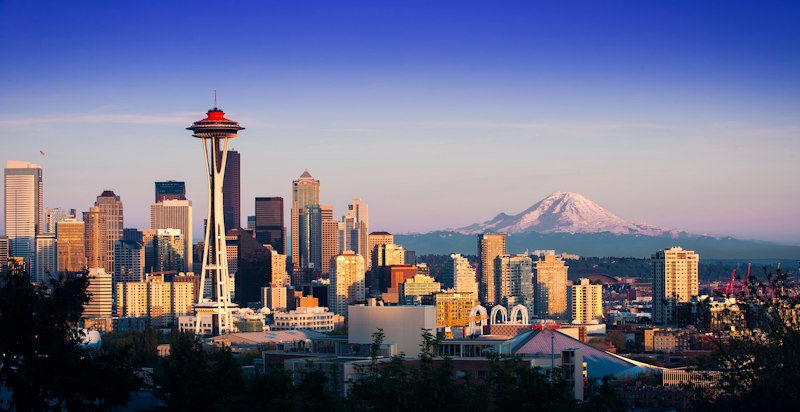
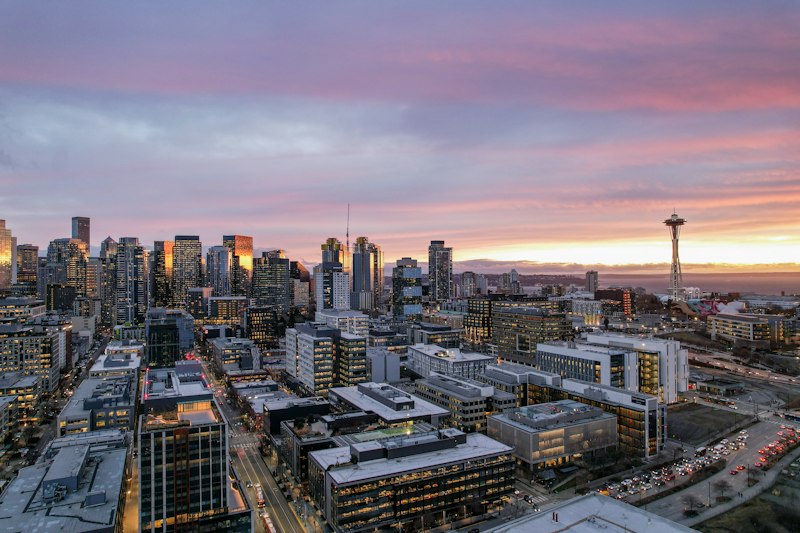
While prices cool in Texas, Florida, and other parts of the U.S., Seattle's urban core has risen counter to the trend. As of July 2025, MLS data shows Seattle city single-family home median prices up 4.2% year-over-year, while Bellevue was up only 0.8% and Kirkland was actually down 0.8% over the same period. This is not mystery — it is the result of tight supply meeting recovering demand.
The Foundation: Chronically Tight Supply
The most fundamental factor is Seattle's long-standing housing shortage. Years of underbuilding, compounded by geographic and policy constraints, keep inventory persistently tight. Seattle is surrounded by water on three sides with hilly terrain — limited developable land — plus strict single-family zoning that means new supply far lags population and employment growth. Tight supply constrains downside price movement — this is the most solid foundation for counter-trend appreciation.
An extreme illustration: Seattle city houseboat prices rose 84% over the past three years, while Bellevue single-family homes rose only 13.5% over the same period. Scarcity assets show exceptional resistance to decline and capacity to lead gains. Houseboats are extremely limited in number with virtually no new supply possible — this extreme scarcity is why they outperformed nearly all conventional home types over three years.
Demand Driver 1: Dramatically Improved Public Safety
Post-pandemic, Seattle's new city government prioritized public safety — adding supportive housing, reducing tolerance for minor crimes, deploying officers to communities, and clearing encampments. From 2022 to 2025, homeless tent encampments fell from 1,558 to 215 (about 86% reduction); crimes fell from 50,198 to 28,792 annually (about 43% reduction). Core neighborhoods like Ballard and Capitol Hill have revitalized, pulling back demand that had been waiting on the sidelines due to safety concerns.
| Safety Metric | 2022 | 2025 | Change |
|---|---|---|---|
| Homeless tent encampments | 1,558 | 215 | -86% |
| Annual crimes | 50,198 | 28,792 | -43% |
Demand Driver 2: Tech Return-to-Office
Starting in 2024, Amazon required employees back 5 days per week; Meta, Google, and Apple require 3 days. More than two-thirds of Seattle's employment is concentrated in the urban core, especially South Lake Union. Return-to-office requirements directly reversed the pandemic-era trend, pulling housing demand back to core employment zones.
Added to this, Interstate 5's planned 3-year repair starting this summer has worsened commutes — many engineers who moved to suburbs during the pandemic are now seriously considering moving back to Seattle's core, boosting urban and Eastside housing demand.
Demand Driver 3: Tourism Recovery
The newly completed $1 billion waterfront promenade just opened, built specifically to drive tourism. In 2024, Seattle attracted 40 million visitors — up 5.3% from 2023 and 15% from 2022. Visitor spending reached $8.8 billion, total economic contribution $12.3 billion, supporting approximately 68,000 jobs. Tourism-generated tax revenue reached $840 million — 10.7% of total government expenditure.
Why the Urban Core Outperformed the Eastside
The urban core rose 4.2% while Bellevue gained only 0.8% and Kirkland fell 0.8%. The Eastside depends heavily on high-earning tech buyers — exactly the group facing AI layoff headwinds. The urban core is supported by multiple demand streams: return-to-office, improved safety, and tourism recovery. Demand source diversity is why the urban core outperformed.
Summary
Tight supply as foundation, combined with improving safety, tech return-to-office, and tourism recovery — this is the real reason Seattle's urban core is rising counter to national trends.
For buyers, don't be misled by the 'national cooling' narrative — understand Seattle's unique supply-demand dynamics. Scarce core-area assets, especially those with supply that is nearly impossible to increase (houseboats, core-area single-family homes), have stronger downside protection and upside leadership potential. In a market of increasing regional divergence, understanding 'where demand is more diverse and supply is scarcer' is far more practically valuable than fixating on national price trends.