Seattle does sit in a seismic zone with real risk of a major earthquake. Whether to buy earthquake insurance depends on home structure, foundation type, and personal risk tolerance. The vast majority of Seattle homes are wood-frame construction — relatively good seismic performance — but earthquake insurance typically carries a 10%–25% deductible, meaning only a major disaster causing significant damage triggers a payout. Buyers need to calculate cost vs. benefit before deciding.
Two Earthquake Threats
Seattle sits on the Cascadia Subduction Zone (CSZ), where the Juan de Fuca Plate meets the North American Plate. The last magnitude-9 event on this zone occurred approximately 325 years ago; research estimates a 10%–15% probability of another M9 event within the next 50 years.
A more immediate threat is the Seattle Fault, which runs through downtown, Mercer Island, Bellevue, and Issaquah along I-90. About 1,700 years ago it produced a magnitude-7 event that raised the ground surface by up to 7 meters; its shallow depth dramatically amplifies the destructive power. Additionally, Mount Rainier, about 60 miles southeast, could produce lahars (volcanic mudflows) reaching the Tacoma area if it erupts. Understanding these two sources — the distant subduction-zone megaquake and the shallow local fault — is the first step in assessing your home's true risk.
Soil Conditions Amplify Shaking
Seattle's ground averages more than 300 meters of loose silt, left by Canadian glaciers melting approximately 18,000 years ago — the true bedrock lies hundreds of meters down. The city also has a unique land-reclamation history: before 1880 it was characterized by steep slopes; during the Gold Rush, Army engineers used high-pressure water cannons to blast clay away, creating 3,000+ acres of new land. Lumen Field, most of the area west of I-5, the International District (Chinatown), and Pike Place Market all sit on this reclaimed land.
These reclaimed layers contain buried construction debris and wood — during an earthquake they produce a 'jello effect,' amplifying ground shaking 2 to 5 times and compounding damage. The same earthquake can cause several times more damage to a home on soft reclaimed fill than to one on solid bedrock. When buying a home, finding out whether it sits on reclaimed or soft soil is more actionable than broadly worrying about 'will Seattle have an earthquake.'
| Geological Risk | Impact |
|---|---|
| Cascadia Subduction Zone | 10–15% chance of M9 in 50 years |
| Seattle Fault | Shallow M7, amplified destruction |
| Soft reclaimed fill | Shaking amplified 2–5x |
| Mount Rainier | Lahar risk to Tacoma area |
Can Your Home Withstand It?
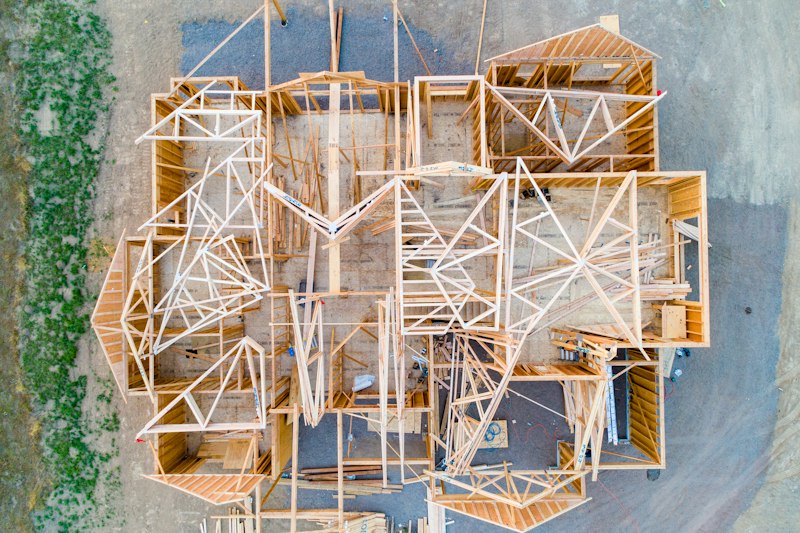
Wood-frame construction is relatively flexible and performs better in earthquakes than brick-and-mortar — but actual performance depends heavily on construction era. Pre-1940 homes have poor foundation-to-structure connections and can slide during strong quakes; soft-story designs (open-pillar first-floor garages) are a structural vulnerability.
Homes built 1940–1980 are mostly reinforced but generally cannot withstand M8+. Post-1980 homes use modern seismic design including shear walls and anchored foundations, and are meaningfully safer overall. For older homes, a structural engineer evaluation ($500–$1,000) can clarify the true risk. Construction era is the most direct indicator of seismic performance — which is why post-1980 wood-frame homes are relatively reassuring on earthquake risk.
Is Earthquake Insurance Worth It?
Seattle earthquake insurance premiums run approximately 0.5% of home value — about $5,000 per year for a $1M home. The deductible is 10%–25% of the insured amount — meaning a $1M–$2.5M home must first absorb $100,000–$250,000 in losses before insurance pays anything.
Historical data: after the 2001 Nisqually M6.8 earthquake, almost no single-family homes were completely destroyed, meaning losses from M6–7 events typically don't exceed the deductible — insurance provides limited real protection. Only in an extreme M9 catastrophe does earthquake insurance truly earn its keep — but in such an event, personal safety itself becomes the primary concern.
That is earthquake insurance's awkward position: small quakes won't pay out (losses below deductible), large quakes are where it helps (but their probability is low). It is fundamentally a tail-risk hedge against a 'low probability, large loss' scenario — not everyday coverage.
| Earthquake Insurance Parameters | Value |
|---|---|
| Annual premium | |
| Deductible | 10–25% of insured amount |
| M6–7 earthquake | Losses often below deductible |
| M9 earthquake | Where insurance truly pays |
Not Just Earthquakes: Volcanos and Location
Beyond earthquakes, Mount Rainier (about 60 miles southeast) is an active Cascade stratovolcano with a massive summit glacier. An eruption could trigger landslides and rapid snowmelt lahars primarily affecting the Tacoma area.
However, compared to California's Pacific-facing tsunami exposure, Seattle's large inland bays and towering snow-capped mountains between it and the open Pacific limit tsunami impact from local earthquakes. The more practical approach — rather than generalized fear — is to assess your home's specific geological location (is it on reclaimed fill, along the Seattle Fault trace, or on a hillside?) and make informed decisions about retrofitting and insurance. Risk is highly localized: in Seattle, a 1990 wood-frame home on bedrock and a 1930 home on soft reclaimed fill face profoundly different risk levels.
Retrofit vs. Insurance: Which Is Better?
| Choice | Best For | Value |
|---|---|---|
| Structural retrofit | Older homes, soft-soil zones | High (preventive) |
| Earthquake insurance | Home is your main asset, limited cash | Medium (tail hedge) |
| Neither | New home, ample assets to self-insure | Risk-tolerance dependent |
For older homes or homes on soft soil, a $3,000–$15,000 structural retrofit (e.g., bolting the foundation, reinforcing the soft-story garage) often offers better value than paying $5,000/year for a high-deductible policy — because it directly reduces the probability of damage. For families with limited liquid assets where the home is their primary asset, earthquake insurance provides last-resort protection against a low-probability large loss. For asset-rich families who can self-absorb a total loss, retrofitting with that insurance budget is usually more efficient.
Summary
Earthquake insurance is neither a 'waste of money' nor a necessity — it is a tail-risk tool that requires evaluation based on your individual situation. For Seattle's Chinese-American homebuyers, the first step is understanding your home's actual seismic profile: construction era, foundation type, and whether it sits on reclaimed soft soil or hillside. Post-1980 wood-frame homes are generally reliable.
From there, run the numbers: for families with limited liquid assets where the home is their primary asset, earthquake insurance provides useful tail-risk protection; for asset-rich families who can self-insure a total loss, redirecting the premium budget to structural retrofitting is usually more cost-effective. Whatever the choice, understanding your home's specific geological location and structural condition is always a more important first step than agonizing over 'should I buy earthquake insurance.'