Many people only discover after signing the contract, taking on a mortgage, and moving into Greater Seattle that they genuinely can't tolerate the rainy season.
But ask yourself: what exactly do you dislike? The total annual rainfall volume? The high frequency of rain days? Or the emotional cost of sustained gray skies? 90% of people can't answer this. They only produce a vague, information-free conclusion: 'Seattle rains too much.'
The real question for residents: in this topographically carved region, where is your personal refuge?
Chapter 1: There Is No Unified 'Seattle Climate'
The first cognitive error: treating Seattle and surrounding cities as one monolithic climate block. Greater Seattle is actually fragmented by mountain ranges, lakes, and bays. Rainfall differences between zip codes are far larger than most people imagine.
Seattle City proper: annual average rainfall ~37 inches. For reference: New York is 49 inches, Atlanta is 50, Miami is 67. By pure water volume, Seattle city residents actually experience less rainfall than New Yorkers.
But move east or north, and rainfall climbs systematically:
- Bellevue & Redmond: precipitation starts climbing, typically 40+ inches
- Lynnwood & Everett: affected by the Puget Sound Convergence Zone — rain here tends to be more intense and sudden
- Issaquah, Sammamish & North Bend: the real 'heavy zone.' Proximity to the Cascade Range foothills causes orographic lifting, pushing annual rainfall to 50-60+ inches
Driving from Seattle Downtown to North Bend — only 30 miles — rainfall can increase 50-60%. This isn't a marginal difference; it's a magnitude shift.
Key insight: the city most complained about for rain — Seattle City itself — is actually the least rainy area in Greater Seattle.
Chapter 2: Terrain Drives Rainfall, Not Administrative Boundaries
Understanding Seattle's rainfall requires understanding three geographical actors: the Pacific Ocean, the Olympic Mountain Range, and the Cascade Range.
Layer 1 — The Olympic Mountain's 'Toll': Moist Pacific winds moving east hit the Olympic Mountains and are forced upward. Rising air cools, moisture condenses, and the windward (west) side of the mountains receives most of the precipitation. By the time these air masses clear the summit and descend toward Seattle city, they've already been wrung out — they're relatively dry and descending. Meteorologists call this the rain shadow effect. Seattle City sits right at the edge of this protected zone.
Layer 2 — The Eastside's 'Secondary Uplift': Continue east from Bellevue through Sammamish to Issaquah, and the terrain rises toward the Cascade foothills. The remaining moisture from those already-depleted air masses encounters a second barrier and is forced up again, triggering a new round of condensation and precipitation. This is why Sammamish and North Bend receive 30-50% more rain than Seattle.
Layer 3 — The North's 'Convergence Zone': Air masses diverted around the Olympic Mountains — some going north, some south — often reconverge in Snohomish County (Lynnwood to Everett). This collision forces air sharply upward, creating intense, localized, sudden downpours — sometimes with hail and thunderstorms.
Chapter 3: Matching Your Lifestyle to Your Location
Three categories for different priorities:
Category 1 — Maximum Rain Shadow: Sequim (and nearby areas). For retirees or fully remote workers. Called the 'Blue Hole,' averaging only 16 inches of annual rainfall — nearly half of Seattle. If you have a strong need for sunshine and no commute constraints, this is the geographic optimal choice.
Category 2 — Commute-Climate Balance: Seattle City (and Shoreline/West Seattle). For most people who still need to commute and want urban amenities. Seattle City's rainfall (~37 inches) is actually relatively low within the metropolitan area. If you're the type who shuts down when it rains, living in the city center, Shoreline, or West Seattle gives you noticeably drier conditions and more frequent sunshine than the Eastside.
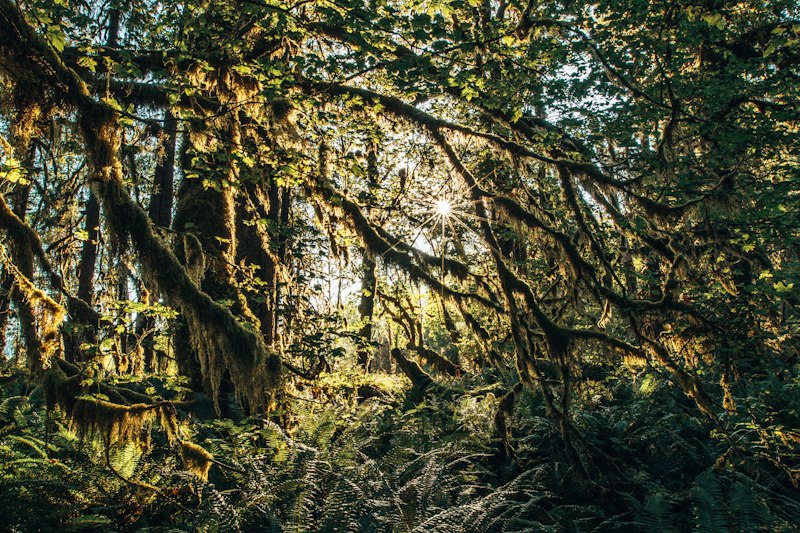
Category 3 — Trading Rain for Space and Nature: Sammamish/Issaquah. Don't avoid these areas because of higher rainfall — they represent the ceiling of residential quality in Greater Seattle. Those lush, forest-embedded communities require rain to exist. Buyers here have implicitly made a trade: more rain in exchange for larger lots, top school districts, and pristine natural environments.
Seattle's rain isn't distributed fairly — but the market is. If you want to avoid rain, you likely have to accept urban density or older homes. If you want premium gardens and forest living, you have to accept more frequent rain and higher maintenance costs.
Knowing Greater Seattle's climate structure isn't about avoiding certain areas — it's about making sure that when you sign the purchase contract, you know clearly what you're getting and what you're giving up. Mature buying decisions don't seek perfection; they confirm: this is the life I want.