You don't need a major renovation before selling. Kitchen and bathroom overhauls are expensive, time-consuming, and the new buyer may not share your taste — they rarely pay back. What truly moves the needle is the 'small investment, big impact' category: projects with the highest ROI that dramatically shift first impressions and sale price. Knowing which dollars to spend and which to skip is the most important lesson for sellers.
Step 1: Four Dimensions to Decide Whether to Renovate
Assess four dimensions before committing to work. First: renovation residual value — how dated is the existing interior? A 1980s kitchen may have only about 10% residual value; a 2015 remodel may still have about 70%. Lower residual value means higher upside from upgrading. Second: the home's capacity to support premium finishes.
In Seattle, a full kitchen remodel starts around $15,000; a bathroom starts around $8,000. A $2M Bellevue home spending $100K on renovation might net $500K more at sale — but an $800K Seattle townhome spending $80K may not recover the cost if a brand-new competing unit down the street sells at $850K. Third: target buyer type. Owner-occupant buyers can be moved by beautiful finishes and will pay a premium; investors see a renovated property as money taken from their future profit — for multifamily, tenant-occupied properties, or homes with ADU/subdivision potential, do not renovate. Fourth: your listing timeline — renovation pace must match your go-to-market plan.
| Assessment Dimension | Key Question | Implication |
|---|---|---|
| Renovation residual value | How dated is the existing interior? | Lower residual = higher upside |
| Carrying capacity | Home's overall price tier | Higher-priced homes have better renovation ROI |
| Target buyer | Owner-occupant or investor? | Don't renovate investor properties |
| Timeline | When to list? | Pace must match |
The Staging Compensation Value Framework
To decide which renovations are worth it, use the 'Staging Compensation Value' concept: if a flaw can easily be masked by staging, it's not worth fixing. This is an extremely practical filter that quickly separates which imperfections to fix versus which to cover with staging.
A real case: a luxury home in Woodway had countertops and carpet in darker tones, but they were consistent with the cabinet and floor style — and the countertops were premium stone, the floors Brazilian cherry. Rather than replacing everything, the seller used staging and lighting to minimize the darkness and highlight the premium materials. The home sold within a week at 7% above market. The lesson: flaws that can be staged away aren't worth big spending. Flaws that staging cannot fix — lighting, exterior appearance — are where to focus the budget.
The Highest-ROI Project List, Ranked
By return on investment, the top priority is lighting: upgrading interior lighting typically delivers around 10x ROI. Use warm light (2700–3000K color temperature) and recessed fixtures. Lighting is also one of the hardest flaws to cover with staging. Second is interior paint, around 3x ROI — the key technique is making the ceiling slightly lighter than the walls to create the illusion of height.
Landscaping and curb appeal return about 3–4x, and they are nearly impossible to compensate with staging. Floors and carpet return about 2–3x — when replacing, update the baseboards too (roughly $1/linear foot). The front door is equally critical: Redfin research shows buyers make their purchase decision within 45 seconds of arrival; repainting the door can deliver around 10x ROI. Exterior paint returns around 3x with very low staging compensation value. What these projects have in common: low cost, major impact on first impressions, and difficult to mask with staging.
| Project | Return Multiple | Notes |
|---|---|---|
| Lighting upgrade | ~10x | Warm 2700–3000K, hardest to stage around |
| Front door refresh | ~10x | Buyers decide within 45 seconds |
| Landscaping / curb appeal | ~3–4x | Near-zero staging compensation |
| Interior / exterior paint | ~3x | Lighter ceiling adds perceived height |
| Floors / carpet | ~2–3x | Replace baseboards too |
Larger Projects Last: Bathrooms and Kitchens
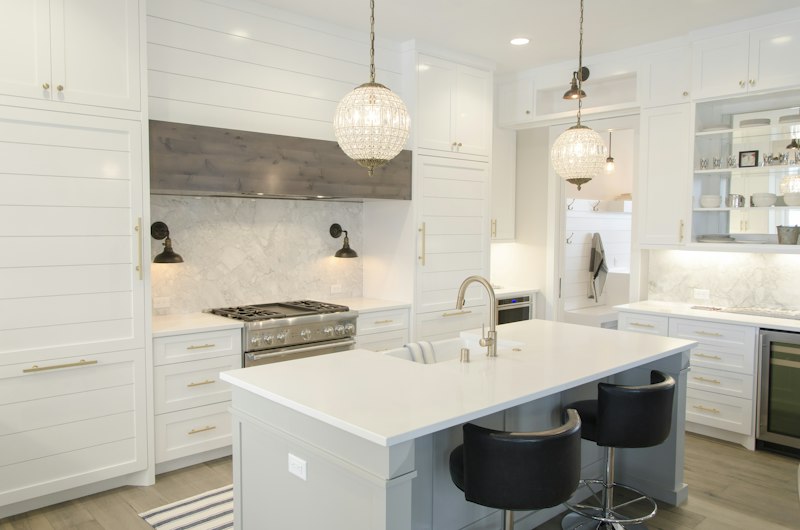
Bathroom renovation returns about 2–3x. The priority is the primary ensuite: vanity, mirror, lighting, and toilet. A limited budget can defer the guest bathroom. Kitchen renovation also returns about 2–3x — the best value moves are painting cabinets white and replacing countertops.
These are ranked lower because they require more work, longer timelines, and can often be partially compensated by staging. In other words, with limited budget and time, sellers should spend first on lighting, paint, and landscaping — the high-return, hard-to-mask items. Only after those are done — and if budget remains — should you consider the major work of kitchen and bathrooms. Jumping straight to 'big ticket' kitchen and bathroom work is the most common and costly seller mistake.
Different Strategy for Primary vs. Investment Properties
Pre-sale renovation strategy must begin with one question: who is the target buyer — owner-occupant or investor? The logic is completely opposite.
| Property Type | Renovate? | Reason |
|---|---|---|
| Targeting owner-occupants | Targeted high-ROI work | Buyers pay a premium for aesthetics |
| Targeting investors | Do not renovate | Investors see the renovation profit as theirs |
| Properties with subdivision/ADU potential | Do not renovate | Selling the potential, not the finishes |
| Tenant-occupied rentals | Keep as-is | Investors value cash flow |
This distinction is critical: many sellers spend heavily renovating investment-oriented properties, only to find that investor buyers not only don't pay extra — they actually offer less, because they see the renovation cost as profit that should have been theirs. Know your buyer, then decide whether to renovate.
Summary: The 8 High-ROI Projects, Prioritized
| Priority | Project | Return Multiple | Stageable? |
|---|---|---|---|
| 1 | Lighting upgrade | ~10x | No |
| 2 | Front door refresh | ~10x | No |
| 3 | Landscaping / curb appeal | ~3–4x | No |
| 4 | Interior / exterior paint | ~3x | Partially |
| 5 | Floors / carpet | ~2–3x | Partially |
| 6 | Bathroom | ~2–3x | Partially |
| 7 | Kitchen | ~2–3x | Partially |
| 8 | Deep cleaning | Very high | No |
The ranking logic: prioritize 'high return + hard to stage' items first (lighting, front door, landscaping, deep cleaning) — these directly determine the buyer's first impression. 'High effort + partially stageable' items like kitchen and bathrooms come last, only when budget allows. Investment properties often sell better without renovation — this is the lesson many sellers learn the hard way after spending money they didn't need to.