
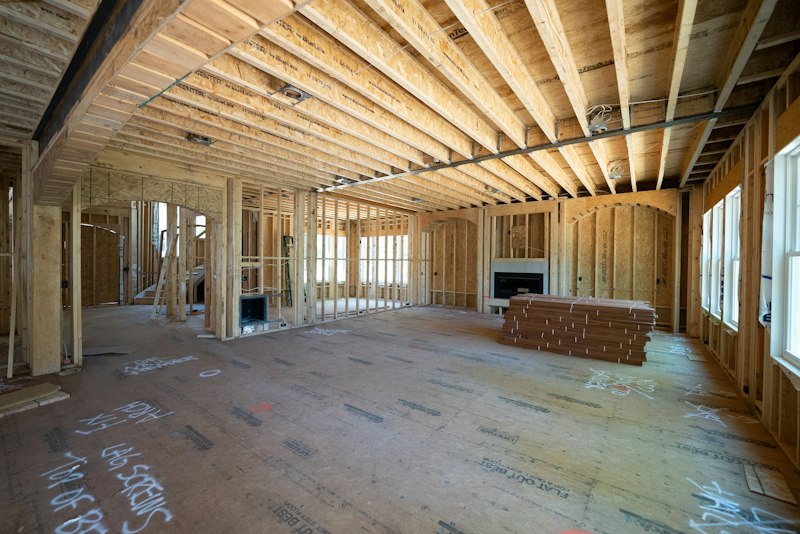
Tariffs are not a one-time shock but a continuously fermenting variable. As imported building material costs stay elevated, developers either raise prices or cut production — new-home supply remains under pressure, making resale homes' relative value more apparent. Buyer psychology turns cautious and decision cycles lengthen. In this context, regional inventory structure and genuine need become the critical variables in any buying decision.
Dual Pressure on New-Home Supply
After tariffs were imposed on imported steel, lumber, aluminum, and other building materials, hard costs for new homes rose. Developers face a dilemma: either pass the cost to buyers (higher new-home prices) or slow construction (fewer starts). Either choice pressures the new-home supply side. Projects with already thin margins may stop outright.
Supply contraction doesn't necessarily show up as immediate price spikes — but it reduces the 'quality-per-dollar' of new homes. The same budget buys less square footage and fewer features. This is tariffs' most direct transmission to housing: by raising construction costs, they squeeze new-home value from the supply side — and that squeeze persists as long as tariffs remain.
New-Home vs. Resale Divergence
As new-home prices rise, resale homes' relative value becomes apparent, shifting some demand from new to resale. This divergence plays out differently by price segment and region: in outer suburbs with concentrated new supply, competition between new and resale is more intense; in established communities, resale homes are more sought after for their location and school district advantages.
For buyers, the key is no longer 'newer is better' but 'who offers better overall value for the same budget.' Under tariffs, new homes' cost advantage is eroded, while resale homes — especially in mature, high-land-value locations — shine in value terms. This requires buyers to move past the 'chase new' default and return to 'value' as the core evaluation standard.
Buyer Psychology Turns Cautious
Tariff uncertainty, compounded by persistently high rates, makes buyers more cautious and extends decision cycles. Rising living costs also compress household budgets — as of April 21, Target's stock was down 32% from its year-high, retailers are broadly unable to pass tariff costs fully to consumers, and everyday expenses are rising, further reducing the funds available for home purchases.
But caution doesn't mean leaving the market. Genuine essential need still exists — buyers are just more selective, more price-conscious, and more diligent in comparison shopping. For sellers, this means facing a cohort of buyers with tighter wallets and higher standards. Pricing and value proposition matter far more than they used to.
| Tariff Transmission | Manifestation |
|---|---|
| New-home cost | Imported materials more expensive → price hike or production cut |
| Demand shift | Some shifts from new to resale |
| Buyer psychology | Cautious, longer decision cycles |
| Living cost | Retail price increases compress buying budgets |
The Rate Deadlock Extends the Wait
The Fed-vs.-White House standoff on rates means the rate cuts that should have come are being delayed by tariff inflation concerns. High rates pressure prices; when rates can't fall, the 'wait and see' mood intensifies and buyers find it harder to act.
This amplifies negotiating room in high-inventory areas and forces sellers to be more realistic on price. Tariffs and rates reinforce each other in a vicious cycle: tariffs push up inflation expectations, inflation concerns keep the Fed from cutting, and high rates further suppress demand. This deadlock won't break quickly, meaning buyer hesitation and negotiating room will persist — especially in high-inventory zones.
Premium vs. Entry-Level: Different Situations
| Segment | Primary Buyers | Situation Under Tariffs |
|---|---|---|
| High-end luxury ($2M+) | Tech immigrants | Double pressure, large negotiating room |
| Entry-level essential | Stable-income residents | More resilient, near supply-demand balance |
High-end buyers — primarily Chinese and Indian tech immigrants in Seattle and the Bay Area — are under dual pressure from tightening immigration policies and stock market volatility, weakening both purchase and hold intentions. Entry-level buyers have more stable income structures and are more resilient. This means even within one city, negotiating room is diverging — premium segment sellers' leverage is weakening; entry-level is closer to balance. Buyers should assess not just their regional inventory but also their price segment.
Actionable Strategies
- Read your area's inventory structure — high-inventory areas offer more negotiating room and more buyer leverage.
- Lock in genuine need before acting — don't be scared off or rushed by tariff headlines.
- When choosing between new and resale, use value, not age, as the decision criterion.
| Role | Strategy |
|---|---|
| Buyer | Read inventory, lock need, compare value |
| Seller | Price realistically, leave small room to negotiate |
| Premium segment | Buyers can negotiate boldly |
| Entry-level | Still need to move decisively |
Summary
For Seattle's Chinese-American buyers and sellers, tariffs' ongoing fermentation won't hit the market in a single direction — it works through supply contraction, cautious psychology, and diverging inventory together.
Buyers: assess your target community's inventory and transaction pace first; negotiate boldly in high-inventory areas; choose between new and resale based on overall value, not age. Sellers: accept buyers' cautious mindset, price realistically to attract genuine essential buyers — don't blindly chase tariff headlines up or panic-cut down. In the tariff-rate deadlock, whoever anchors decisions to fundamentals — inventory, demand, value — will maintain the initiative through continuing uncertainty.