
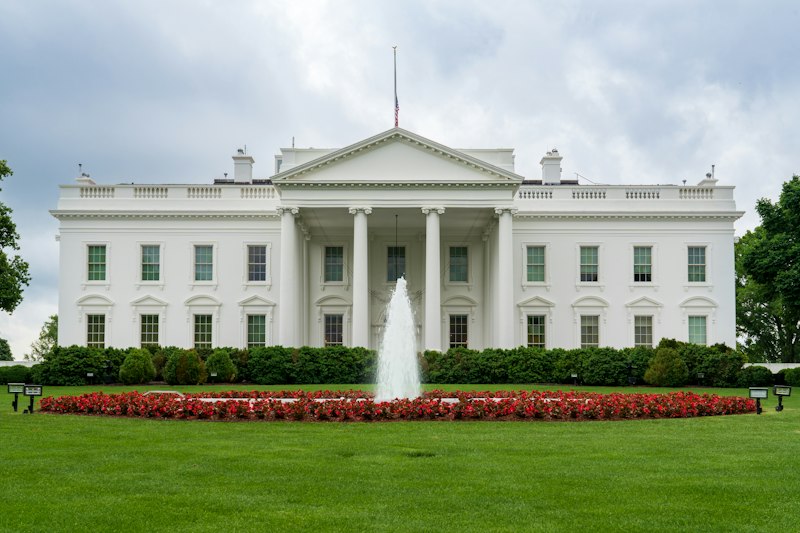
A political black swan event itself has limited direct impact on home prices — what truly matters is how it shifts policy expectations and mortgage rate direction. On July 13, 2024, Trump survived an assassination attempt at a Pennsylvania rally. The event significantly raised his odds of returning to the White House, shifting market focus from breaking news to the policy implications of the Republican platform. Short-term sentiment swings are far smaller than long-term fundamentals like rates and employment.
A Black Swan's Real Function Is Changing Policy Expectations
The reason the assassination attempt merits attention from real estate investors isn't that the shooting itself would shock home prices — it's that it materially raised Trump's odds of winning, putting the 2024 Republican platform at the center of policy expectations. Post-event statements from key parties further reinforced this shift.
The Republican platform that formally took effect July 15, 2024, themed 'America First,' centered on a policy package: tax cuts, increased defense spending, deficit expansion, calls for rate cuts, higher tariffs, and immigration control. For real estate, the key isn't who was shot — it's how this policy package, if implemented, will reshape rates, supply, and population flows.
Dual Impact: Falling Rates and Opening Federal Land
First impact: mortgage rates could fall faster, reducing homebuying costs and unlocking move-up demand trapped in high rates, bringing more homes to market. But this won't necessarily cause prices to rise or fall — rate cuts simultaneously stimulate both supply and demand sides. The most certain outcome is more active transactions, benefiting escrow, lenders, agents, Redfin, Zillow, and related industries; commercial real estate also gets breathing room.
Second impact: opening some federal land to increase new home supply. This is a supply-side negative for central and southern states with large federal land reserves (California, Arizona, Nevada, Utah, Colorado, etc.), while major cities on the East and West Coasts have almost no federal land and are barely affected.
Immigration, Tariffs, and Red-Blue State Divergence
Third impact: large-scale deportation of undocumented immigrants. Current Southern states — especially Texas and California — have seen surges of undocumented immigrants pushing up rents and prices. Mass deportations would reduce rental demand in these states, cooling prices. Fourth: America First and higher tariffs widen the U.S.-China divide, causing a dramatic drop in Chinese immigration. Seattle, Los Angeles, San Francisco, and New York gathering spots could see a decade-long immigration gap — communities where Chinese immigrant demand supported prices (Bellevue, Irvine) face the risk of weakened buyer pools.
Fifth: increased defense and emerging-sector spending (AI, space tech) strongly benefits Microsoft, Amazon, and other large tech companies. A large share of U.S. defense spending converts into contracts for tech giants — combined with the AI dividend, large companies become harder to dislodge, broadly benefiting Seattle and the Bay Area as their headquarters concentrations. However, the most expensive Chinese-American community segments may not sustain high prices. Additionally, red states are increasingly restrictive: Florida and Georgia have passed laws restricting Chinese nationals from buying farmland and properties near military installations, pushing some investors from red states to blue states.
Sentiment Is Short-Term Noise; Fundamentals Drive Long-Term Trends
Worth emphasizing: political events mainly affect housing indirectly through risk aversion and policy expectations. Short-term sentiment swings are usually far smaller than fundamentals like rates and employment. Election-year uncertainty can delay some buy/sell decisions but won't change the long-term price anchor set by supply-demand and rates.
Simultaneously, there's enormous uncertainty between a party platform and actual policy implementation. For example, the national rent control proposed at the NATO summit in July 2024 (capping rent increases at 5%/year) will most likely remain a gesture that won't pass Congress. Rational investors should track actual policy implementation and fundamental evolution — not get swept away by news sentiment.
Summary
For Seattle Chinese-American buyers and investors, the worst response to a political black swan is making long-term buy/sell judgments based on news sentiment. Short-term swings are usually noise. What truly deserves tracking: the pace of rate cuts, the stability of local tech employment, and the actual impact of tariff and immigration policy on population inflow.
From a regional allocation perspective, Seattle and the Bay Area — concentrated with large tech company jobs — will most likely maintain strong housing markets, but heavily Chinese-immigrant-dependent top-tier communities need monitoring. Meanwhile, red-state restrictions are pushing large amounts of capital toward blue states — investors holding hundreds of units in Texas are reportedly planning to relocate entire portfolios to Seattle. Understanding the direction of policy implementation matters more than betting on any single event.