
Buying real estate in the U.S. from China — the biggest trap is applying Chinese thinking to America. From property rights and home types to valuation methods, carrying costs, transaction processes, and financial/tax tools, there are a series of fundamental differences. Understanding these differences is the true cognitive foundation for buying homes in the U.S.
Ownership and Land: Permanent Ownership vs. 70 Years
American residential real estate is predominantly fee simple (permanent ownership) with private land — the home and the land both belong to the owner. China has 70-year residential use rights with state-owned land. This is the most fundamental difference between the two countries' real estate.
But permanent ownership doesn't mean complete freedom: land often comes with various restrictions — prohibiting mineral extraction, prohibiting arbitrary tree removal, prohibiting parking in driveways, etc. All these restrictions are listed on the title report. Therefore, buying in the U.S. means you must read the title report thoroughly — otherwise you can fall into serious traps.
Home Types and Age
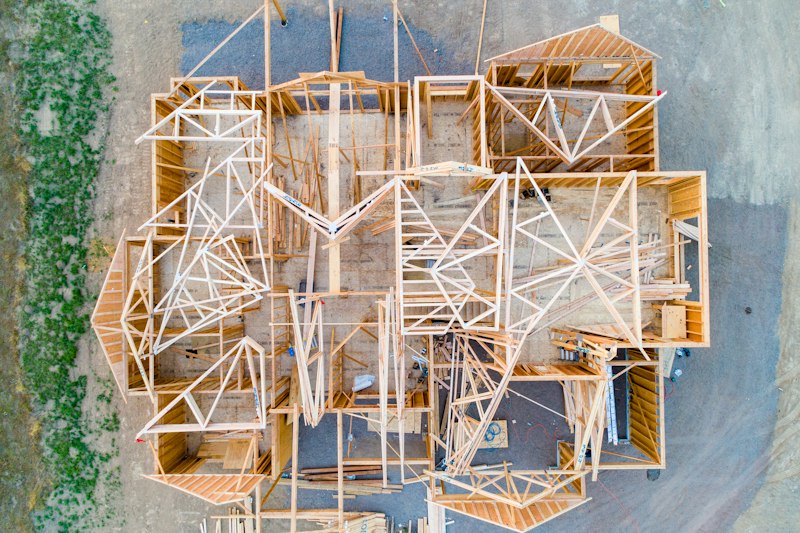
American housing is dominated by single-family homes. As of late December 2023, condos represented only 13.1% of the U.S. market; the remaining 86.9% are single-family homes — the reverse of China's high-density communities with public transit. American single-family homes are mostly wood-frame construction: built quickly, highly adaptable, and easy to renovate or add to. The downside is insufficient sturdiness in tornado-prone and disaster-prone regions.
The share of new homes in the U.S. is also very low. In Washington State, for example, approximately 49,000 new homes were built in 2023, while the statewide inventory is ~2.5 million — new construction is less than 2% of existing stock. The best locations and communities are often occupied by older homes.
Valuation: Overall Value, Not Per-Square-Foot
U.S. home prices are not measured by price-per-square-foot. They are determined by the combination of location, land, layout, finishes, and views. Two homes of identical size can differ drastically in price. Applying the Chinese per-square-meter mindset to U.S. home buying will inevitably misjudge their true value.
Carrying Costs: Property Taxes and High HOA Fees
U.S. real estate has ongoing carrying costs. Property taxes are assessed annually at roughly 1–3% of value depending on the state — a $1M home incurs $10,000–$30,000 in annual property taxes alone, a significant expense.
Condo HOA fees are equally substantial. Currently most condos charge $500–$1,000/month in HOA fees, and the HOA can decide to levy a Special Assessment — for example, requiring each unit to pay an additional $10,000 to repair a roof in a given year. The upside is well-maintained community operations; the cost is persistently high carrying costs.
Transaction Process and Financial/Tax Tools
U.S. real estate transactions are highly institutionalized: both buyer's and seller's agents, title insurance, third-party escrow, inspection, and various contingencies — each layer protecting transaction security.
Financial and tax tools are also an important component of U.S. real estate investing. U.S. mortgage rates are long-term and predictable; mortgage interest and investment property depreciation can generate tax benefits. This toolkit is one that most Chinese buyers haven't previously encountered.
Key Data
| Metric | Value/Situation | Notes |
|---|---|---|
| U.S. single-family / condo share | 86.9% / 13.1% | As of late December 2023 |
| WA State 2023 new construction | ~49,000 units | Less than 2% of 2.5M inventory |
| U.S. property tax | ~1–3% of value | $1M home: $10K–$30K/year |
| Condo HOA monthly fee | ~$500–$1,000/month | Additional Special Assessment risk |
| Ownership term | U.S. permanent; China 70 years | U.S. land is privately owned |
Summary
These fifteen differences come down to one sentence: when buying in America, don't use Chinese logic. From ownership rights and home types to valuation methods, carrying costs, transaction processes, and tax tools — everything requires relearning.
For Chinese-American buyers new to U.S. real estate, focus your learning on three areas: first, read the title report thoroughly and understand all land restrictions; second, factor ongoing carrying costs like property taxes, insurance, and HOA fees into your long-term budget; third, leverage institutional tools like title insurance, escrow, and inspections, as well as the tax benefits of mortgage interest and depreciation. Understanding these fundamental differences is what allows you to navigate the American real estate market confidently.