
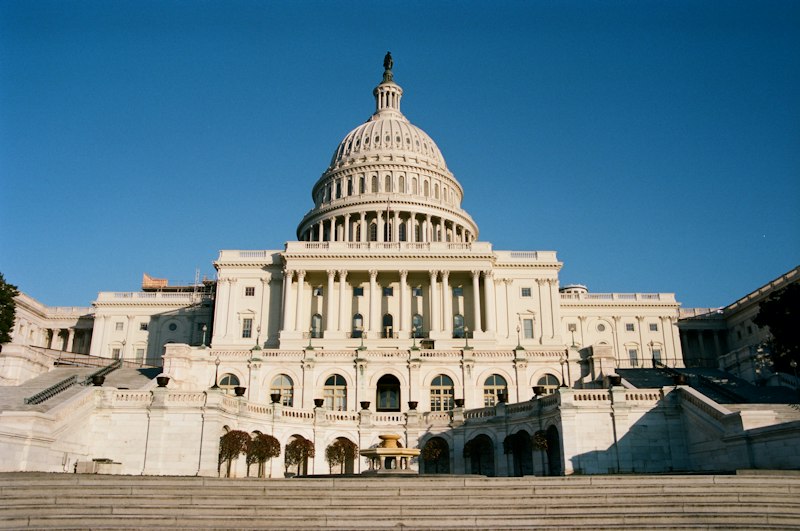
From historical data, U.S. election outcomes have limited long-term impact on home prices. What truly drives real estate cycles has always been fundamentals — mortgage rates, employment, and housing supply — not who moves into the White House. Short-term market sentiment may swing on policy expectations, but over longer time horizons, policy execution quality matters far more than the election itself.
Elections Don't Change Fundamentals
Every election year, the real estate market gets pulled into political narratives, with buyers and sellers often adopting a wait-and-see posture based on candidates' policy promises. But reviewing the past several decades: regardless of Democrat or Republican administrations, the medium-to-long-term price trajectory has always been driven by macro fundamentals — mortgage rate levels, labor market strength, and new housing supply volume. Election-driven uncertainty shows up more in transaction pace than in price trends. Some buyers and sellers defer decisions awaiting policy clarity, causing short-term volume swings — but this delay is typically absorbed quickly once election dust settles.
2008: How Policy Reshaped the Market
2008 is the best case study of this dynamic. The financial crisis was in full swing; subprime defaults triggered a national wave of bank foreclosures and market panic. After Obama's landslide election, his subsequent housing policies played a key role in market recovery. Core initiatives included the Making Home Affordable program, with HAMP (loan modification to lower monthly payments for struggling homeowners) and HARP (refinancing allowing underwater homeowners to reset their loans). The Dodd-Frank Act of 2010 dramatically tightened bank lending standards and established the Consumer Financial Protection Bureau, eliminating the previous practice of lending freely to those without repayment capacity.
The Long-Term Policy Legacy
These policies' impact on today's market is far deeper than 'who won.' First, lending standards significantly tightened — banks are more cautious, fundamentally reducing systemic risk. Second, consumer protections improved and loan transactions became more transparent. Third, affordable housing development was persistently encouraged — critical for low-income housing security in today's high-price environment.
FHA's low-down-payment loan programs were also refined during this period and remain the preferred tool for first-time buyers — especially young people and middle-to-low-income groups. This demonstrates that long-term market structure is shaped by institutional and fundamental evolution, not election outcomes.
Distinguishing Short-Term Sentiment From Long-Term Trends
Understanding elections' impact on housing requires distinguishing short-term sentiment from long-term trends. Before and after elections, media speculation about taxes, immigration, and rate direction amplifies uncertainty, causing some families who planned to transact to pause. This hesitation typically concentrates in the weeks to months around election day — a disruption in transaction pace.
What truly shapes the price level takes years or even decades to manifest. The strict lending standards built post-2008 still suppress bubbles today; the continuation of FHA and affordable housing policies still shapes first-time buyers' entry capacity. These institutional legacies span multiple administrations, proving long-term housing direction doesn't hinge on any single election outcome.
For investors, misreading election noise as trend signals is a common and costly mistake. Emotion-driven early action or panic selling is usually revealed as misjudgment once fundamentals reassert.
Summary
For Seattle's Chinese-American buyers, don't base long-term buy/sell decisions on 'who will win.' Election-year sentiment swings are mostly short-term noise. Rushing in or sitting out based on political expectations often means missing the best timing based on your own financial situation. The more prudent approach: closely monitor mortgage rate movements, local employment stability (especially tech), and King County housing supply changes — plan your homebuying pace based on these quantifiable fundamentals. Shifting attention from political narrative back to economic data is the rational choice for navigating election cycles.