
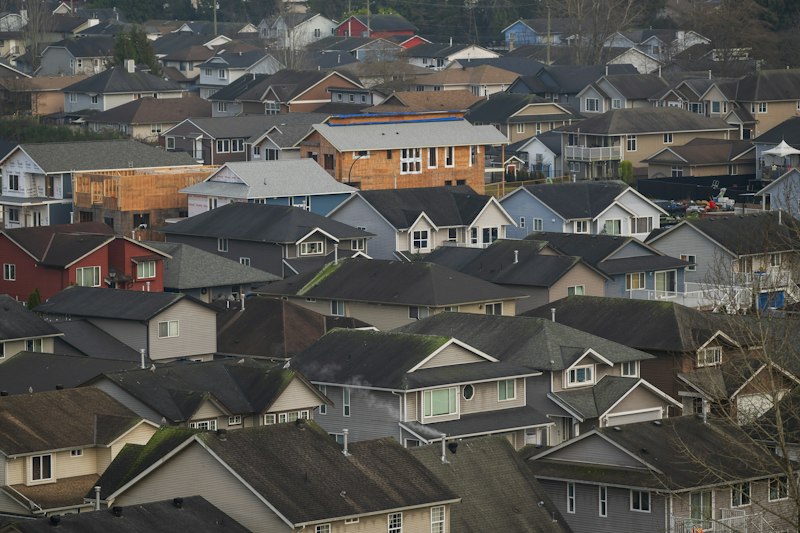
The U.S. housing market of the next decade will leave behind the era of buying any home and profiting, entering a highly bifurcated phase driven by a new rate normal, demographic shifts, upzoning legislation, and technological change. Over the past decade the S&P 500 tripled, the Nasdaq quadrupled, national home prices doubled, and Seattle and Bay Area prices tripled — but several conditions underpinning that prosperity are now changing irreversibly.
Mortgage Rates Won't Return to Pandemic Lows
Following the 2009 financial crisis, U.S. mortgage rates remained around 4–5% for years. They briefly dropped to 3% during the 2020 pandemic, then rose to 7–8% as the Fed hiked. Even though markets expect a rate-cutting cycle, mortgage rates are unlikely to return to 4%.
The reason: the neutral rate has shifted higher. Powell and multiple Fed officials have noted that the future neutral rate will be 0.5–1% above pre-pandemic levels, implying long-term mortgage rates will most likely settle in the 4.5–6% range. For investment, this is a headwind: Seattle and Bay Area cap rates are only about 3%, while borrowing costs run 4.5–6% — without price appreciation, real estate investment actually loses money. Before the pandemic, cap rates of 4% against 4–5% mortgages roughly broke even.
Baby Boomers Will Release a Wave of Supply
The next decade is the decade Baby Boomers exit the scene. This generation numbers about 74.1 million, representing ~21% of the population, yet controls ~52% of national wealth with a 79% homeownership rate — the wealthiest generation in American history. They will sell their homes: moving to Sun Belt states or downsizing.
The following Generation X numbers about 65.3 million with 72% homeownership — about 11.5 million fewer homes than Boomers own. For comparison, all of 2023 saw only about 4.1 million U.S. home sales. The extra Boomer homes represent about 2.8 times the annual national transaction volume. This means resale supply will increase substantially, with smaller ~1,000 sq ft single-family homes and condos becoming top choices for retirees.
The Sun Belt's Hidden Risk
A meaningful share of Boomers have already purchased in Sun Belt states. The population structures of Arizona, Florida, and Texas already skew older. More retirees will move to Sun Belt states going forward — but when this generation passes, there may be no buyers for their Sun Belt properties, creating localized oversupply risk.
This hidden risk reminds investors: demographic dividends and demographic burdens are often two sides of the same coin. Assessing a region's long-term value requires understanding the generational replacement trend in its demographic structure — not just today's hotness.
Upzoning Reprices Land
Upzoning legislation is eliminating single-family-only zoning and redefining land's highest and best use. In 2023, Washington State passed a law requiring major cities to permit DADUs (detached accessory dwelling units). King, Snohomish, and Pierce counties must issue implementing rules by June 30, 2025. These ~1,000 sq ft units can typically be sold separately — matching retiring Boomers' needs while causing the market to rediscover value in parcels near transit corridors with upgrade potential.
Technology and AI Reshaping Cost and Demand
Technology is a dual variable on both supply and demand. Modular construction will gradually lower new-build costs and timelines. And AI is changing employment structure — the explosive growth of high-income tech jobs won't repeat its past glory, reshaping housing demand across different regions. Both supply and demand will be rewritten by technology.
Key Data
| Metric | Value/Situation | Notes |
|---|---|---|
| Seattle/Bay Area prices past decade | ~3x | National home prices ~2x |
| Future long-term mortgage rates | ~4.5–6% | Neutral rate 0.5–1% above pre-pandemic |
| Seattle/Bay Area cap rate | ~3% | Below borrowing cost; appreciation-dependent |
| Boomer population/wealth/homeownership | ~74.1M / 52% / 79% | ~21% of population |
| Boomer vs. Gen X extra homes | ~11.5 million | ~2.8x 2023 national annual sales |
| DADU rules deadline | June 30, 2025 | King, Snohomish, Pierce counties |
Summary
The era of buying any home and profiting is over. The next decade is highly bifurcated. The new rate normal limits pure leverage arbitrage, Boomer-released supply will impact the small-unit market, and upzoning plus technological change redistribute value to parcels with land-use upgrade potential.
For Seattle Chinese-American buyers and investors: choosing the right city, the right structure, and understanding land's highest and best use matters far more than timing the market. Prioritize parcels with strong net population inflow, proximity to transit corridors, and lot-split or addition potential — and factor rate costs and long-term supply-demand into every investment analysis.