
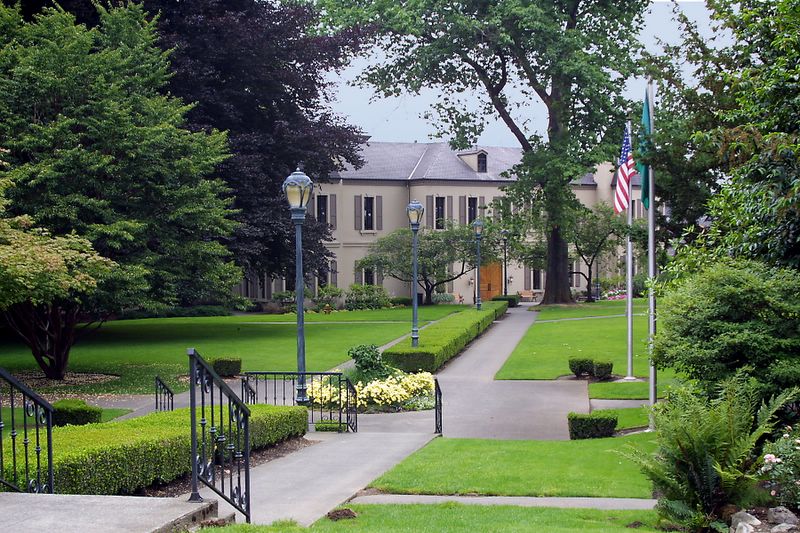
Woodinville sells something nearly extinct on the Eastside—a rural lifestyle. Wineries, horse farms, large lots, the privacy of being wrapped in woods, all while sitting in the quality Northshore school district. In 2026 its median single-family price runs roughly $1.1M to $1.5M, homes average about 25 days on market—one of the slowest-selling cities on the Eastside—but that "slow" is itself part of its character: people buying Woodinville aren't grabbing a standard single-family home; they're choosing a way of life. Among my clients, the ones who genuinely bought happily in Woodinville all wanted this rural feeling from the heart; those who came only for "big" or "low price per square foot" usually underestimated the costs behind large lots and the difficulty of resale. In this guide, I want to break down the real value of Woodinville's "half-rural, half-school-district" positioning, the hidden costs of large lots, and exactly who it's for.
Market Overview: The Eastside's Slowest, but Slow for a Reason
Look at Woodinville's 2026 numbers first. Its market traits differ completely from the Eastside core—mid-to-high priced, slow-selling, highly split—and understanding this is the premise for judging it.
| Indicator | 2026 Value | Meaning |
|---|---|---|
| Median single-family price | ~$1.1M–$1.5M | Mid-to-high, but highly split |
| Average days on market | ~25 days | One of the Eastside's slowest, buyers careful |
| School district | Northshore (A) | Same source as Bothell, good enough |
| Lot trait | Large lots, wineries, horse farms | Rural scale rare on the Eastside |
| Price split | Extreme | From ordinary house to winery estate, worlds apart |
25 days on market is among the Eastside's slowest, but the slowness isn't because Woodinville is bad—it's because it sells a niche lifestyle. The buyer pool is inherently narrow; those who truly want large-lot rural living are a minority, so matching takes time. My core judgment on Woodinville's market: its "slowness" and "split" are two sides of one coin. An estate near the wine country with several acres and an ordinary single-family home may both be called "Woodinville," but their prices, buyers, and resale logic are entirely different worlds. With Woodinville, you absolutely cannot gauge anything by a single median.
The Core Selling Point: A Rural Lifestyle Rare on the Eastside
What's scarcest and unavailable elsewhere in Woodinville is its rural lifestyle. On the highly urbanized, land-precious Eastside, owning several acres, seeing horse farms and vineyards, with neighbors separated by woods—this private living is something very few cities can offer. Woodinville Wine Country gathers many wineries and tasting rooms, and weekends carry a pastoral atmosphere you simply can't find in tech-commuter cities like Bellevue or Redmond.
Even rarer, this rural living doesn't come at the cost of schools. Woodinville enjoys the Northshore district (rated A), so kids attend good schools, making it the rare combination of "rural living + good schools." For families who long for the countryside yet won't compromise on their children's education, Woodinville is nearly the only place on the Eastside that can satisfy both wishes at once. My judgment on this selling point: what's valuable in Woodinville is this scarce "have your cake and eat it too" combination—provided you genuinely want rural living, not seduced by the two words "large lot."
| Selling point | Scarce? | Worth it? |
|---|---|---|
| Rural lifestyle (wineries, horse farms, large lots) | Rare on the Eastside | Extremely worth it for those who truly want it |
| Northshore good schools | Good enough (A) | Worth it, without sacrificing education |
| Rural + good schools combo | Almost one-of-a-kind on the Eastside | Scarce combination, core value |
| Privacy, greenery, space | Hard to find on the urbanized Eastside | Irreplaceable for certain families |
The Double-Edged Sword of Large Lots: The Real Cost of Space and Privacy
Woodinville's biggest draw is large lots, but large lots are exactly where I, as an agent, most need to pour buyers cold water. Large lots give you space, privacy, and a pastoral feel, but they also give you higher maintenance costs, slower resale, and a narrower buyer pool—a genuine double-edged sword that many first-time large-lot families completely underestimate.
Maintenance first. Several acres means heaps of landscaping, weeding, tree pruning, and driveway upkeep—either you spend huge amounts of time, or you hire help year-round, an ongoing expense. Infrastructure next: many Woodinville rural properties aren't connected to municipal sewer and water, using septic and well systems instead. Septic needs periodic inspection and maintenance, and replacement when it fails is a five-figure project; wells involve water-quality testing and pump maintenance—hidden costs city single-family buyers never worried about. Finally, resale: the buyer pool for large-lot rural property is narrow, with few who truly want it, so once you sell, you may wait longer with weaker negotiating leverage.
| The "double edge" of large lots | The good side | The cost side |
|---|---|---|
| Space and privacy | Pastoral feel, privacy, greenery | High, time-consuming maintenance |
| Septic/well | Independent of municipal | Periodic inspection, costly repairs |
| Resale | — | Narrow buyer pool, slow sale, weak leverage |
| Holding | High quality of life | Hidden holding costs widely underestimated |
My hard advice to every family wanting a Woodinville large lot: before buying, get professional septic and well inspections, calculate the annual maintenance budget for real, and think clearly about "if I sell in five years, who buys this from me." Only when you can answer these three questions do you truly understand large lots. I once had a couple initially smitten with a rural estate on three acres, until I walked them through the combined annual landscaping, septic, and well maintenance costs and analyzed how narrow the resale buyer pool for such homes is. They cooled down and chose a home with a moderate, manageable lot, and to this day they're glad they didn't act on impulse. Buy the romance of a large lot—but buy it with the ledger in hand.
Extreme Price Split: Same "Woodinville," Two Worlds
Woodinville's price split is among the Eastside's most extreme, and it's where buyers most easily misjudge. An estate near wine country with several acres and open views may sell for two to three million or more; an ordinary-location home on a regular lot may be just over $1.1M. Both carry the "Woodinville" name, but their price logic, buyer profiles, and value retention are completely different.
This means using "Woodinville median $1.3M" to gauge any specific home is almost certainly wrong. You must price unit by unit based on lot size, distance from wine country, special features (horse farm, vineyard, detached studio), and whether it has municipal water and sewer. When handling Woodinville deals, I never tell clients a blanket "Woodinville costs about X"; I first ask clearly which Woodinville you want—a rural estate with a few acres of horse farm, or an ordinary single-family home with good schools. These two needs correspond to two completely different markets.
Housing Types and Inspection: The Special Homework of Rural Property
Woodinville homes require more thorough inspection homework than the Eastside core, because rural-property pitfalls differ entirely from city single-family. Beyond the septic and well mentioned above, rural estates commonly have detached garages and work sheds, older main structures, propane or electric rather than gas heating, and termite, moisture, and drainage issues from large timber structures. None of these show up from a glance at listing photos; they require professional inspection item by item.
When handling Woodinville deals, the time I invest in inspection is usually two to three times that of a city single-family, because I add septic testing, well water-quality and pump testing, and when necessary check the lot's drainage and foundation. This inspection cost looks like extra spending but actually saves you from sudden five-figure repairs after purchase. My hard advice to Woodinville buyers: rather pay a few hundred to a thousand more on inspection than skip this homework—once you buy a rural property wrong, the repair cost and effort far exceed your imagination. Doing inspection thoroughly is the first insurance for buying Woodinville well.
Wine Country and Community Life: An Underrated Quality of Life
Woodinville Wine Country is the soul that distinguishes it from the whole Eastside. Hundreds of wineries, tasting rooms, and boutique dining gather here, and the famous Chateau Ste. Michelle even hosts open-air summer concerts, giving the area a leisurely, social, pastoral character on weekends. For many families working under high pressure in tech, this contrast of "a ten-minute drive from office tower to vineyard" is itself a scarce quality of life.
When I show clients Woodinville, I often remind them: don't look only at the house; count this "community lifestyle" into the value. A community where you can taste wine, ride horses, browse a weekend farmers market at your doorstep, with pastoral neighborly socializing, offers a rhythm of life Bellevue and Redmond can't give. This soft value is hard to quantify, but it's exactly why Woodinville buyers accept the slower commute and higher maintenance. For those who truly identify with this life, Woodinville isn't buying a house—it's buying a way of living. Grasp this and you grasp where Woodinville's premium comes from.
Woodinville Under the Headwind: A Niche Market's Fragility and Resilience
The negative net migration, tech layoffs, and new H-1B policy of 2025–2026 affect Woodinville in a special way. On one hand, Woodinville is inherently a niche market with a narrow buyer pool; in a demand-contracting headwind, a narrow pool means slower sales and weaker leverage—a two-to-three-million rural estate has few potential buyers to begin with, and a headwind may stretch days on market further. This is its fragile side.
On the other hand, buyers of Woodinville's high-end rural property are often high-net-worth local families or move-up buyers not dependent on tech visas, less sensitive to employment and visa policy than pure tech commuters, giving it some resilience. My judgment on Woodinville in a headwind: transaction volume will be quieter and cycles longer, but truly scarce quality rural estates may not loosen much in price—because few want them and even fewer can supply them, scarcity holds the price. For owner-occupant buyers, a headwind may actually be a window to patiently find a desired rural property and secure a negotiation, provided you've truly come for long-term living and don't mind short-term liquidity.
Side-by-Side and Holding Costs
Place Woodinville in the Eastside comparison and its uniqueness is clear: other cities sell schools, commute, or lake views; Woodinville sells a rural lifestyle—its biggest differentiation.
| City | Median price | Schools | Relative to Woodinville |
|---|---|---|---|
| Woodinville | ~$1.1M–$1.5M | Northshore (A) | Baseline, rural large lots |
| Bothell | ~$900K–$1.2M | Northshore (A) | Same district, more urban, cheaper |
| Redmond | ~$1.0M | LWSD (A+) | Higher schools, nearer jobs, small lots |
| Bellevue | ~$1.55M | BSD (#1 statewide) | Top-tier schools, no rural scale |
Note that Woodinville and Bothell share the Northshore district, but Bothell is more urbanized, cheaper, with a slightly better commute, while Woodinville is pricier for rural scale and large lots. If your core need is Northshore schools rather than rural living, Bothell is often more cost-effective; Woodinville's premium holds only when you genuinely want that pastoral feel. This is a judgment I stress to clients repeatedly: the price gap between Woodinville and Bothell is essentially the price tag on "rural lifestyle." Whether you're willing to pay that extra $200K–$300K for wineries, horse farms, and large lots depends on how important this life is to you, not on how many more bedrooms the house has. On holding costs, beyond property tax (King County effective rate about 0.8% to 1%), you must fold large-lot maintenance and septic/well testing and repair into your true holding cost—a part often underestimated.
Commute Reality: Another Cost of the Countryside
Woodinville's rural feel is one with its geography—it's on the Eastside's northern edge, far from job centers like Bellevue, Seattle, and Microsoft, and rural roads are often less convenient than city ones, with no light rail and weak public transit. This means living in Woodinville depends almost entirely on driving, with commute times clearly longer than the Eastside core cities.
For families who can accept remote/hybrid work or have flexible work locations, this commute cost is offset by the lifestyle reward; but for dual-career families who must commute long daily, the rural quiet becomes a real time cost at morning and evening rush. My reminder for Woodinville buyers is the same as for Bothell: before buying, run a real rush-hour commute from your actual work address; don't be seduced only by the wine-country leisure of weekends. The romance of rural living is real, and so is the hardship of the commute—both must honestly go into the decision. Especially for families where two people commute into the city, or kids need ferrying to various activities, Woodinville's location will significantly increase daily time on the road; settle this time math before signing.
Buyer Profiles, Mistakes, and Strategy
Woodinville suits best the family that genuinely longs for a rural lifestyle, values space and privacy, can accept large-lot costs and a long commute, and needs good schools. It suits worst those who buy big for the sake of big, lured by low per-square-foot prices without counting holding costs.
| Buyer profile | Fit | Note |
|---|---|---|
| Truly wants rural living, space, privacy | High | Woodinville's core value |
| Remote/hybrid work, loves the pastoral | High | Commute disadvantage offset by lifestyle |
| Comes only for low large-lot unit price | Low | Severely underestimates holding/resale cost |
| Purely for Northshore schools | Low | Bothell is more cost-effective |
| Commute-sensitive dual-career | Low | Rural location makes commuting hard |
There are three common mistakes. First, lured by large lots and low unit prices while ignoring hidden costs like septic, well, and landscaping maintenance, only to find holding costs far exceed expectations. Second, gauging the highly-split Woodinville by a single median, completely misjudging a home's value. Third, being moved only by the wine-country pastoral on weekends while ignoring the real weekday commute.
My strategy for Woodinville buyers is clear. First, confirm whether you truly want rural living—if you only want good schools, go to Bothell; if you want the pastoral, then Woodinville is right. Second, for large-lot property, always get professional septic and well inspections, and think through the maintenance budget and "who buys this in five years." Third, price unit by unit based on lot, location, features, and municipal utilities—don't trust the median. Fourth, test the commute, honestly counting the rural time cost into quality of life.
| Strategy | Core action | Mistake to avoid |
|---|---|---|
| Confirm the motive | Truly rural, or just schools | Buying big for the sake of big |
| Inspect large lots | Professional septic/well testing | Ignoring hidden holding costs |
| Price unit by unit | Precise valuation by lot/features | Gauging by a blanket median |
| Test the commute | Walk it at rush hour on-site | Being seduced by wine-country leisure |
Conclusion
My judgment on Woodinville is this: it sells a nearly extinct Eastside rural lifestyle—wineries, horse farms, large lots, privacy—while sitting in the good Northshore district, a scarce "have it all" combination. The 2026 median of $1.1M–$1.5M, 25 days on market, and A-rated schools sit atop a niche market with a narrow buyer pool, extreme split, and slow sales. Its value is irreplaceable for families who truly want rural living, but a trap for those who come only for "big."
Woodinville's large lots are a double-edged sword: they give you space and privacy, but also high maintenance, the hidden costs of septic and well, and slower, weaker resale. Its prices are extremely split and must be priced unit by unit, never gauged by a median. To buy Woodinville, first honestly answer "do I truly want the countryside, or just the schools"—for schools Bothell is more cost-effective, for the pastoral Woodinville is worth it. Among the Woodinville deals I've served, the families who bought happily were, without exception, those who genuinely loved this rural living and counted the large-lot costs crystal clear. It doesn't suit everyone, but for the right person, it's a one-of-a-kind Eastside home. I often say a home ultimately answers "what kind of days do you want to live"—if you long for vineyards and woods outside your door at dawn, kids growing up in a big yard, weekends tasting wine and strolling at your doorstep, then what Woodinville offers is something money can hardly buy elsewhere on the Eastside. As long as you've counted the costs and done your homework, this sense of rural belonging will reward you every day to come.


